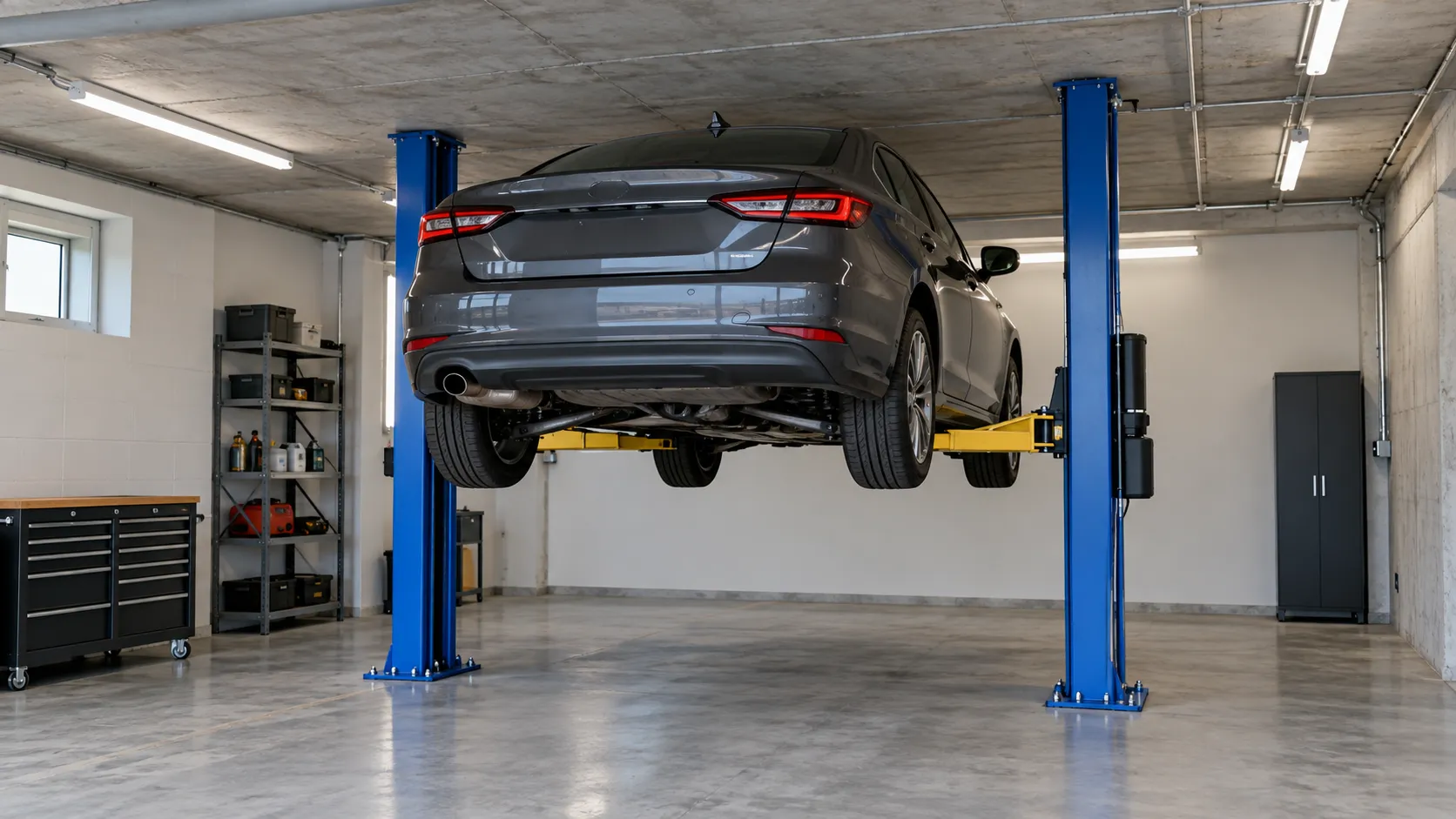
What Factors Affect Wholesale Price Hydraulic Scissor Lift Car Quotations for B2B Procurement?
A wholesale price hydraulic scissor lift car quotation cannot be compared fairly from capacity and unit price alone. Buyers should first confirm the actual service application, vehicle or motorcycle fit, lifting capacity, rise height, platform size, hydraulic and cylinder configuration, installation condition, required safety and control features, documentation, sample approval, quantity, packing and delivery basis. Two suppliers may use the same general phrase “hydraulic scissor lift” while quoting different rise types, platform structures, included accessories or approval evidence. The practical procurement task is to normalize the complete lift configuration before deciding which offer is lower or more suitable.
Start With the Service Task, Not the Wholesale Price
The first question is what the lift must raise and what service work it must support. A tire shop, motorcycle repair area, detailing bay, quick-service lane and general workshop can all search for a hydraulic scissor lift, but the correct equipment configuration may be different.
The RFQ should describe the work bay in operational terms: vehicle type, wheelbase or contact points where relevant, normal lifting load, service height required by the job, whether the lift must be portable or fixed, and how often the equipment will be used. If the application is primarily motorcycle service, that should be stated directly. If the buyer intends to use the lift for passenger cars, the supplier should confirm whether the selected model and platform arrangement fit that application.
This matters for the CT608 topic because the target product name itself combines hydraulic vertical car lift table, double scissor full-rise structure, 4000kg lifting capacity and motorcycle application wording. That does not mean every buyer should assume one universal workshop use. It means the RFQ must make the intended use clear so the supplier can confirm product fit.
Chentuo’s Car Lifts category provides the broader product family, but the final quotation should still be based on the buyer’s actual workshop and service task.
Capacity Should Be Matched to the Real Vehicle or Equipment Load
Capacity is often the first number in a lift inquiry, but it should be linked to the real load being lifted. A buyer should not simply request the highest available capacity if the application, platform size and lifting method do not match the vehicle or equipment.
The CT608 product page identifies a 4000kg lifting capacity. That number is important, but the RFQ should still ask how the load is supported on the platform, whether the vehicle type is within the intended use, and whether the lift configuration is suitable for the buyer’s service routine. Capacity alone does not define platform contact, wheel positioning, center-of-gravity control or access around the vehicle.
A better quotation request gives the supplier the expected load range, the typical vehicle or motorcycle type, and any special use case such as low-profile access, long-wheelbase vehicles, side work, underbody work or equipment maintenance. The supplier can then confirm whether the quoted lift is the correct configuration or whether another lift architecture is more appropriate.
If two quotations use different load assumptions, the price comparison becomes unreliable. One offer may be a realistic service-bay solution; another may be a nominal-capacity quote that still requires a different model after technical review.
Rise Height and Working Position Change the Value of the Lift
A hydraulic scissor lift’s value depends on whether it raises the vehicle to the height required by the job. CT608 product information lists lifting-height figures including 1750/550mm and a maximum lift-height statement of 25–72.8 inches. Because public product data can sometimes contain mixed metric and inch descriptions, buyers should confirm the exact minimum height, maximum working height and usable service height in the supplier quotation.
The real question is not only “how high can it lift?” It is whether that height supports the service operation. Motorcycle service, tire replacement, chassis access, detailing and quick inspection may each require different working positions. A lift that works well for one bay may not provide the same operator access in another.
The RFQ should separate:
- minimum platform height or drive-on height;
- maximum lifting height;
- usable service height for the intended job;
- platform width and length;
- vehicle access around the lift;
- clearance around the bay when raised.
If the buyer does not define the working height, suppliers may quote different rise categories and the prices will not represent the same value. A compact or mini lift, a mid-rise lift and a full-rise double-scissor lift should not be compared only by headline capacity.
Scissor Structure, Platform Design and Hydraulic Scope Must Be Clarified
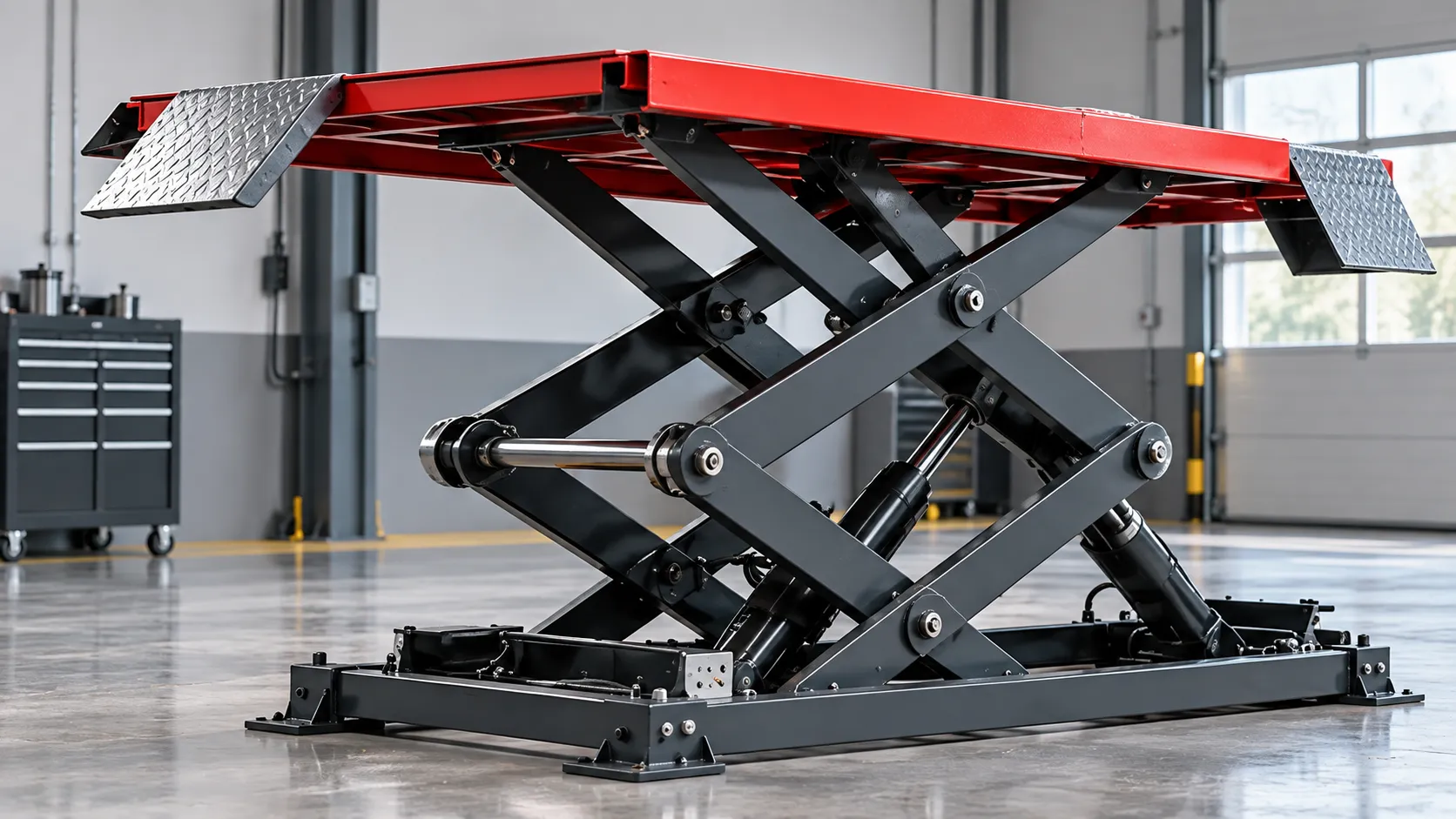
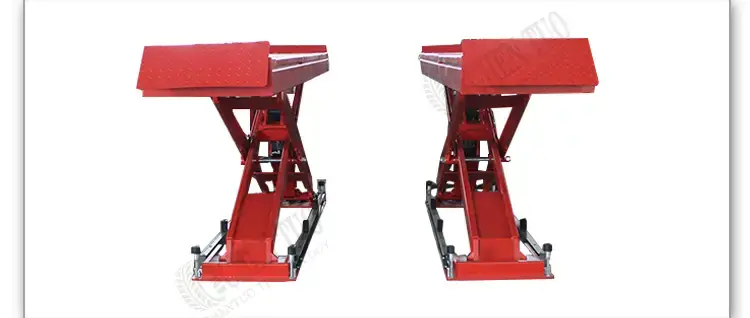
Scissor lifts differ in structure and supplied scope. The target CT608 page references a double-scissor hydraulic lift arrangement and a double-cylinder hydraulic lift. Those details affect stability, lifting movement, service access and the commercial package being quoted.
However, the buyer should not assume that all items shown or implied by a product page are included in every quotation. The RFQ should ask the supplier to identify the lift structure, hydraulic drive scope, cylinder configuration, control method, platform structure, ramp or table arrangement if applicable, and any accessories included in the standard package.
The supplier response should also declare what is not included. Installation materials, power cables, oil, anchor hardware, optional adapters, shipping crates, spare wear parts or workshop tools may be handled differently by different suppliers. A quotation that includes only the lift body is not directly comparable with a quotation that includes a more complete installation or accessory package.
This is where many wholesale price comparisons become misleading. The buyer sees a lower unit price, but the quote may exclude items that another supplier included. Scope separation is therefore more important than trying to negotiate price before the equipment configuration is defined.
Workshop Layout and Installation Conditions Affect Product Fit
Even a technically suitable lift needs a suitable workshop environment. A scissor lift may be chosen because it saves side space compared with some column lifts, but the actual bay still needs enough floor area, working clearance, access path, power arrangement and surface condition.
Before requesting a final quotation, the buyer should provide the planned installation or use environment:
- indoor or outdoor use;
- available floor space;
- floor condition and any site-preparation constraints;
- available power supply;
- surrounding walls, columns or equipment;
- whether the lift must be portable, movable or fixed;
- operator access around the raised vehicle;
- storage or parking requirements when the lift is lowered.
These details can change product selection. A portable or compact lift may solve a space problem but may not suit every service task. A full-rise arrangement may improve underbody access but require more vertical and surrounding clearance. A quotation should therefore connect the lift model to the buyer’s bay layout rather than quote a product in isolation.
Documentation and Evidence Should Match the Buyer’s Approval Process
For distributors, garage equipment installers and workshop chains, approval evidence can be part of the buying decision. The required documents may include product specification sheets, operating manual, packing list, inspection record, electrical information, warranty statement if offered, and any certificate or compliance document that the buyer’s market requires.
The important point is that document names are not enough. The buyer should check whether the document identifies the quoted model, whether the specification values match the product being ordered, whether the operating voltage and configuration match the destination market, and whether any stated certificate actually applies to that model and version.
If a buyer requires local installation approval, electrical conformity, dealer documentation or a private-label package, that requirement should be written into the RFQ. Do not assume it is included because another supplier included it in a previous order.
| Quotation Factor | Buyer Input Needed | Why It Changes the Quote |
|---|---|---|
| Application | Motorcycle, passenger car, quick-service, repair bay or distributor stock | Defines whether the selected lift architecture fits the intended job |
| Capacity and vehicle fit | Expected load, vehicle type and platform contact requirements | Prevents capacity-only comparison from hiding product mismatch |
| Rise and platform | Minimum height, maximum height, usable service height and platform size | Different rise categories can create different price and fit outcomes |
| Hydraulic scope | Cylinder configuration, control scope and included hydraulic components | Clarifies what is included in the equipment package |
| Installation environment | Floor space, power, clearance and fixed or portable use | Determines whether the lift can be installed and operated as intended |
| Documentation | Specifications, manual, inspection, certificate or approval evidence | Changes the supplier’s evidence package and buyer acceptance route |
| Packing and shipment | Export packing, accessory packing, labeling and destination conditions | Protects equipment and makes quotations commercially comparable |
The table should be used as a normalization tool. It does not assign price weight to each item; it helps the buyer prevent different scopes from being compared as if they were identical.
Quantity and Distributor Context Should Be Separated From Technical Fit
Wholesale buyers often ask for quantity pricing before the exact lift configuration is fixed. That reverses the correct order. The supplier first needs to know the product model, voltage or power requirements, accessory scope, documentation package, packing method and market destination.
After the technical package is defined, the buyer can separate order quantity into sample, trial order, dealer stock, mixed product order or repeat program. A one-unit evaluation order may need different packaging and document attention from a container-level distributor order. A dealer may also require spare-parts recommendations, manuals, label format or consistent packaging for resale.
For mixed orders, list the quantity by model. Do not ask suppliers to average a scissor lift, two-post lift and wheel-service equipment into one workshop-equipment price. A mixed quotation may be commercially useful, but the lift price should still be traceable to the exact product and included scope.
Packaging and Delivery Scope Can Affect the Real Cost of Ownership
Heavy workshop equipment must arrive in usable condition. For a hydraulic scissor lift, packing should protect platforms, hydraulic components, control elements, hoses, connectors, painted surfaces and accessories. If the buyer requires export packing, dealer labeling or consolidated shipping with other garage equipment, that should be included in the quotation request.
The buyer should ask how the lift is packed, what accessories are packed separately, how the model and order are identified, and which documents are shipped with the equipment. If damage protection or moisture control is important for the destination route, state it clearly rather than assuming a standard packing method.
A lower quote may not be lower after missing packing requirements are added. For B2B procurement, packaging is not decoration; it is part of delivery acceptance.
How Should Buyers Review the CT608 Product Page?
The CHEN TUO CT608 Portable Mini Hydraulic Vertical Car Lift Table Double Scissor Full Rise 4000kg Lifting Capacity for Motorcycles page should be treated as the target product reference for this quotation topic. It provides the product family and key public claims such as hydraulic drive, double-cylinder arrangement, double-scissor structure and stated lifting capacity.
The product page should not replace the buyer’s application review. Before approving the quotation, the buyer should confirm whether CT608 fits the intended vehicle or motorcycle service task, workshop layout, platform requirement, power condition, document requirement and packing scope.
This boundary is important because the search phrase includes “car,” while the product title also refers to motorcycles. The safest procurement approach is not to rewrite the product. It is to ask the supplier to confirm the exact intended application and declare any limitation or better alternative before the buyer compares wholesale quotations.
RFQ Checklist for a Comparable Hydraulic Scissor Lift Quotation
A complete inquiry should include:
- intended service application and vehicle or motorcycle type;
- required lifting capacity and normal working load;
- minimum height, maximum lift height and usable service height;
- platform size and vehicle contact requirements;
- fixed, portable or movable use expectation;
- workshop floor, space and clearance conditions;
- power supply and destination market requirements;
- hydraulic, cylinder, control and accessory scope to be quoted;
- required safety or locking features to be confirmed by the supplier;
- manual, specification, inspection and certificate requirements;
- sample, dealer evaluation or bulk-order context;
- quantity by model and configuration;
- packing, labeling and export-shipment requirements;
- spare parts, consumables or optional accessories if required;
- supplier deviations, assumptions and excluded items.
Ask each supplier to return the offer as Confirmed Configuration / Included Scope / Optional Scope / Documentation Scope / Deviation / Buyer Input Required. Once the application, lift structure and commercial scope are fixed, the buyer can submit a normalized RFQ through Chentuo’s contact and inquiry page instead of comparing unsupported headline prices.