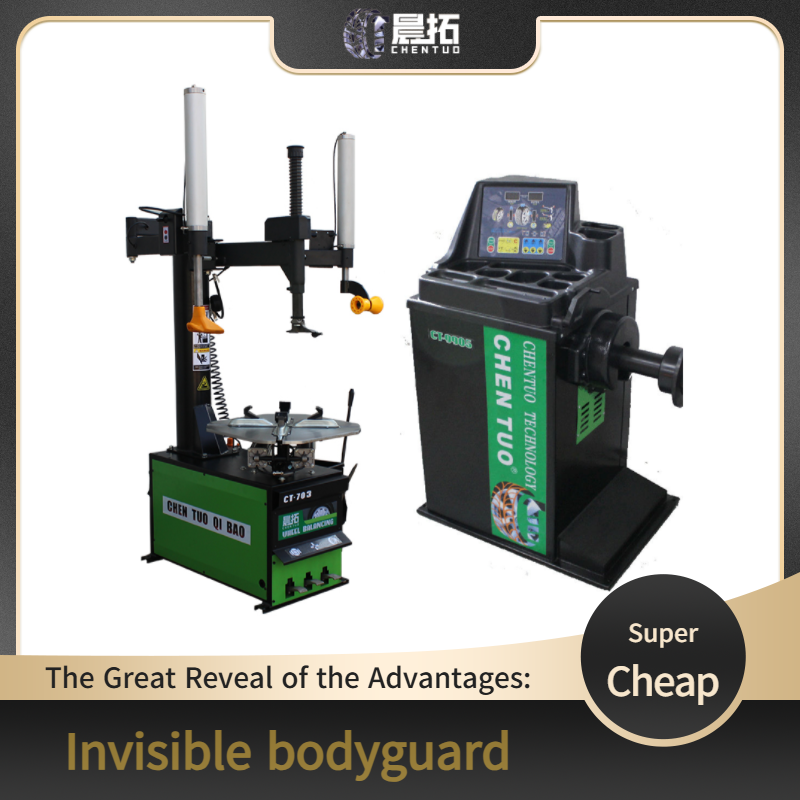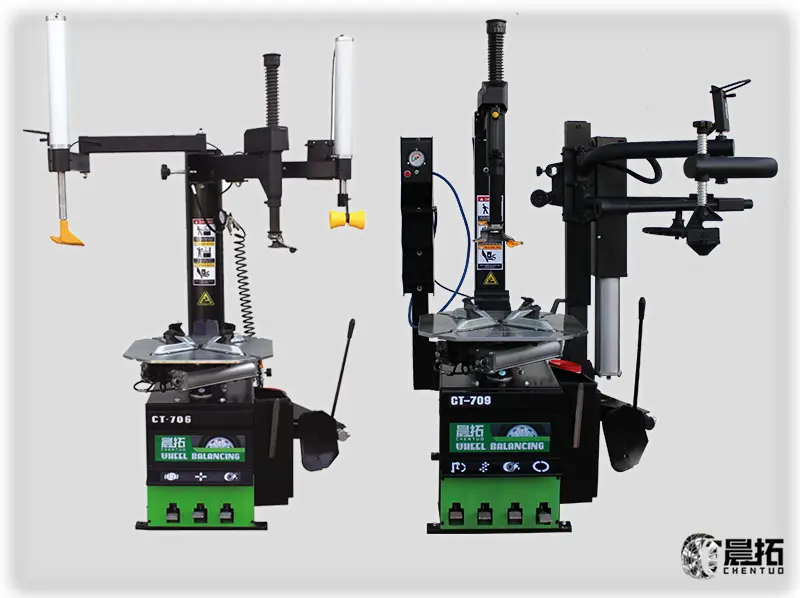
Tire changers on the market are divided into two main power types: pneumatic and hydraulic, with the core difference stemming from the power transmission medium Pneumatic models rely on compressed air to drive the cylinders. Since air is compressible, the response is quick and light, the body is simple and easy to maintain, and it is for light tires such as those on passenger cars and motorcycles. It is the mainstream choice for small and medium-sized quick-repair shops due to its lower cost and flexible start- operation.
Hydraulic models transmit power using hydraulic oil. Since liquid is incompressible, the output torque is stable with strong explosive force. The tire pressing and peeling force is uniform rebounding. It is more effortless when dealing with heavy-duty trucks, thick-walled engineering tires, and hard vacuum tires. It maintains consistent force during long periods of continuous operation and less likely to scratch the rims.
Simple distinction: Choose pneumatic for daily small car quick repairs; choose hydraulic for large vehicles, modified thick tires, and high-frequency heavy- maintenance. Understanding the characteristics of these two power systems allows you to choose the right "strongman" based on your shop's business, improving tire changing efficiency and reducing tire wear.