Can a Wheel Balancer Fix a Bent Rim? Balance vs Runout
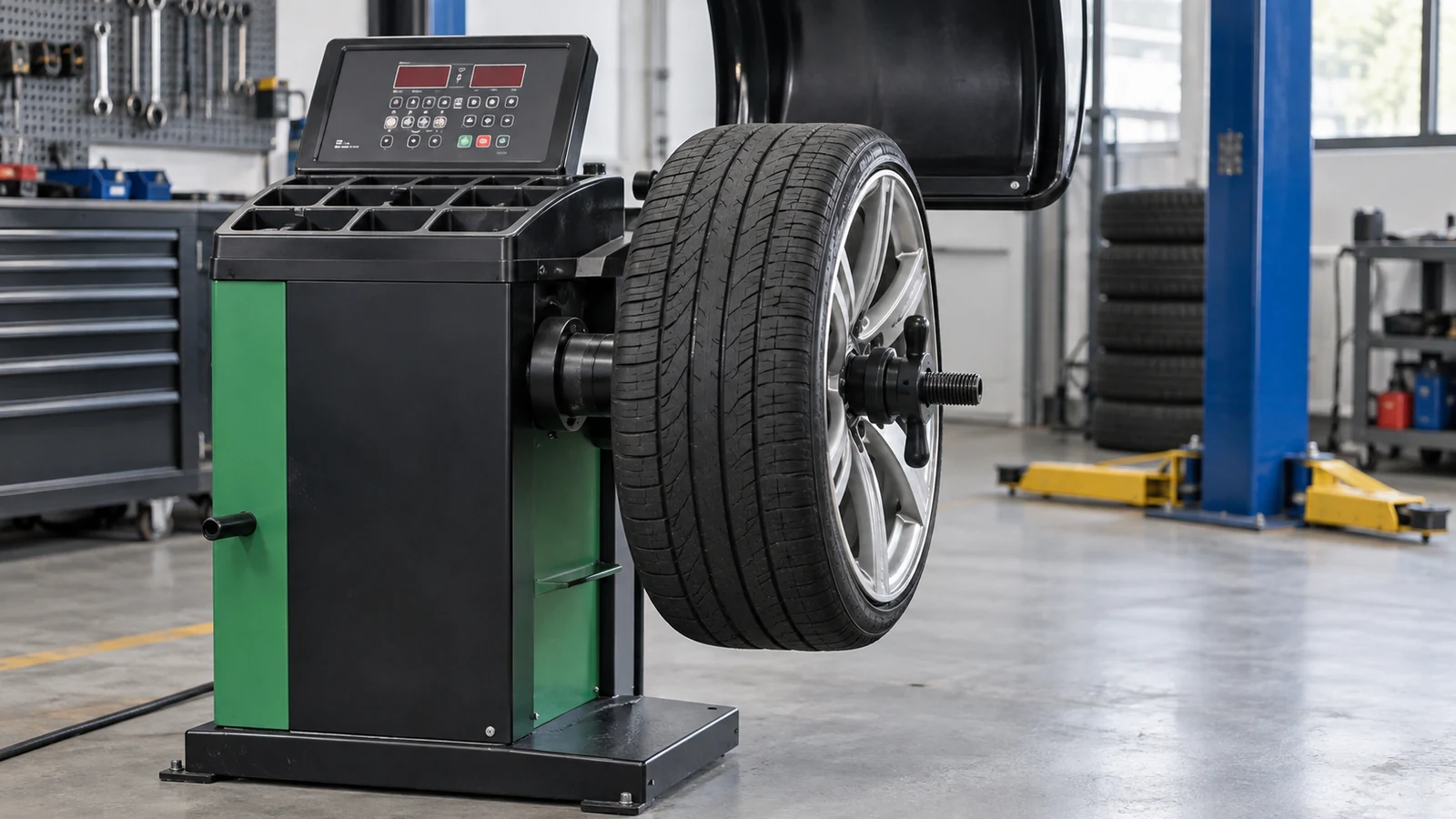
A wheel balancer can correct mass imbalance in a wheel-and-tire assembly, but it cannot physically straighten a bent rim. Adding or repositioning correction weights changes how mass is distributed around the rotating assembly. It does not restore a rim that is no longer geometrically true. That distinction matters because a wheel can show acceptable balance readings and still have radial or lateral runout, tire-related force variation, or another condition that contributes to vibration.
For repair shops and equipment buyers, the practical question is not simply whether a machine can “fix” a bent rim. It is what the machine measures, what its correction process changes, and which additional checks are needed when vibration remains after balancing. Chentuo supplies wheel balancers for tire-service applications, but functions beyond conventional balancing should always be confirmed for the exact model.
What Wheel Balancing Can Correct
Wheel balancing addresses mass distribution. A wheel-and-tire assembly rotates around an axis, and an uneven distribution of mass can create centrifugal forces that increase with speed. A balancer identifies the amount and angular position of correction needed so a technician can place weights at the appropriate correction planes.
The important point is what that correction changes. The added weight changes the mass distribution of the rotating assembly. It does not reshape the rim, repair a dent, remove a flat spot, or restore a distorted bead-seat area. A bent rim is a geometric condition; imbalance is a mass-distribution condition. They can exist separately or at the same time.
| Condition | What needs to be evaluated | What balancing weights can change | What still needs separate confirmation |
|---|---|---|---|
| Mass imbalance | Uneven mass around the rotating assembly | Correction of the measured imbalance | Mounting repeatability and the final balance result |
| Bent or distorted rim | Geometric deviation of the rim | Nothing about the rim shape itself | Runout, visible damage and model-specific repair or replacement criteria |
| Tire-related non-uniformity | How the tire behaves as it rotates and, where relevant, under load | Only the mass-imbalance component | Tire condition and any additional diagnostic measurement required |
This is why a wheel that accepts correction weights should not automatically be described as having a “fixed rim.” The balancing process may solve the mass imbalance even though another mechanical condition remains.
Why a Balanced Wheel Can Still Vibrate
A good balance result answers a specific question: whether the machine has corrected the measured mass imbalance within the procedure being used. It does not, by itself, prove that every part of the wheel-and-tire assembly is geometrically or mechanically normal.
Radial and Lateral Runout
Radial runout describes variation in the rotating surface in the radial direction. In simple terms, the measured surface may move closer to and farther from the rotational center as the wheel turns. Lateral runout describes side-to-side movement relative to the reference plane.
These measurements need a defined reference, measurement point and procedure. A visible wobble can be a reason to inspect the assembly, but visual observation alone does not establish the size or cause of a runout condition. Measurements taken at the rim and measurements taken at the tire surface also answer different questions.
A bent rim may contribute to runout, but persistent vibration after balancing should not be treated as proof that the rim is bent. Incorrect centering on the balancer, tire irregularity, mounting issues or other vehicle conditions can also change what the driver feels.
Tire Behavior Under Load
Some vibration problems are related to how a tire behaves under load rather than only to its free-spinning mass distribution. That is another reason why conventional balance data and broader diagnostic measurements should not be treated as interchangeable.
For a workshop, the practical rule is straightforward: if a wheel-and-tire assembly is balanced but the symptom remains, do not keep adding weights simply because the vibration is still present. Confirm that the assembly was mounted correctly for measurement, then determine whether the next check should address runout, tire condition or another part of the vehicle.
Can a Wheel Balancer Detect a Bent Rim?

The answer depends on the machine. A standard balance measurement is designed to identify imbalance. Some wheel-balancing systems add separate runout or rim-condition measurement functions, while others do not. A machine that can measure a rim-related condition is still not a rim-straightening machine.
When comparing equipment, separate the following tasks:
| Measurement task | What the result can help show | What it does not prove by itself |
|---|---|---|
| Wheel balancing | Location and amount of mass correction required | That the rim is geometrically true |
| Rim runout measurement | Geometric deviation at the specified measurement location | That the rim can or should be repaired |
| Loaded tire / assembly diagnostic measurement | Additional information about tire-and-wheel behavior under the stated test method | A universal diagnosis for every vibration complaint |
For Chentuo equipment, buyers should confirm these capabilities model by model. The CT9905 wheel balancer is a verified product page in the company’s current range. The published page supports its use as a wheel-balancing product, but the available information should not be extended into claims about automatic rim-runout measurement, loaded diagnostic testing or rim straightening unless those functions are confirmed in the specific model documentation.
What to Check When a Bent Rim Is Suspected
If a bent rim is suspected, the next step should be to identify the actual abnormality rather than treating additional balance weight as a repair method. A practical inspection sequence can be organized around four questions.
- Is there visible wheel or tire damage? Inspect the rim, bead-seat area and tire for obvious damage or deformation. If damage is present, follow the applicable wheel, tire and vehicle guidance before continuing normal service.
- Was the assembly centered correctly during measurement? Poor mounting or centering can change balance readings and can make a normal wheel appear inconsistent. If readings change significantly after removing and remounting the wheel, the mounting interface deserves attention.
- What surface is showing runout? Distinguish a rim measurement from a tire-tread or complete-assembly observation. They do not identify the same source automatically.
- What does the applicable specification allow? Repair, replacement and acceptable runout limits depend on the relevant wheel, vehicle and tire requirements. A universal millimeter threshold should not be applied to every wheel.
What Match Mounting Can and Cannot Change
Match mounting changes the relative position of the tire and wheel so their characteristics can be combined more favorably when the applicable procedure supports it. It can help optimize an assembly in some situations, but it does not physically straighten a distorted rim. If the wheel itself is outside the applicable geometric or damage limits, rotating the tire on the rim is not a substitute for the required wheel decision.
This distinction is useful in practice: balancing, match mounting, runout measurement and rim repair are different operations. A workshop should know which one it is performing before interpreting the result.
What to Confirm When Choosing a Wheel Balancer
A repair shop should choose a balancer from the measurement tasks it actually needs. If the main requirement is routine wheel balancing, confirm the wheel range, mounting system, correction modes and operating workflow for the intended vehicle mix. If the shop also wants rim-condition or other diagnostic measurements, verify that those functions are explicitly documented for the exact model.
Chentuo’s wheel-balancer range provides a product starting point for workshops and equipment buyers. Before ordering, prepare the wheel types you commonly service, representative rim diameters and wheel weights, the expected daily workload, and any additional measurement functions that matter to your process.
The core answer remains simple: a wheel balancer can correct measured mass imbalance, but balancing weights cannot straighten a bent rim. When a balanced wheel still vibrates, the next step is to identify whether the remaining issue is runout, tire behavior, mounting or another vehicle condition—and then use the appropriate inspection or repair process.
For model-specific information, you can discuss your wheel-balancing requirements with Chentuo and provide the wheel types, size and weight range, workshop application, quantity and any diagnostic functions you need confirmed.