How Often Should a Wheel Balancer Be Calibrated? 7 Signs Your Machine Needs Recalibration
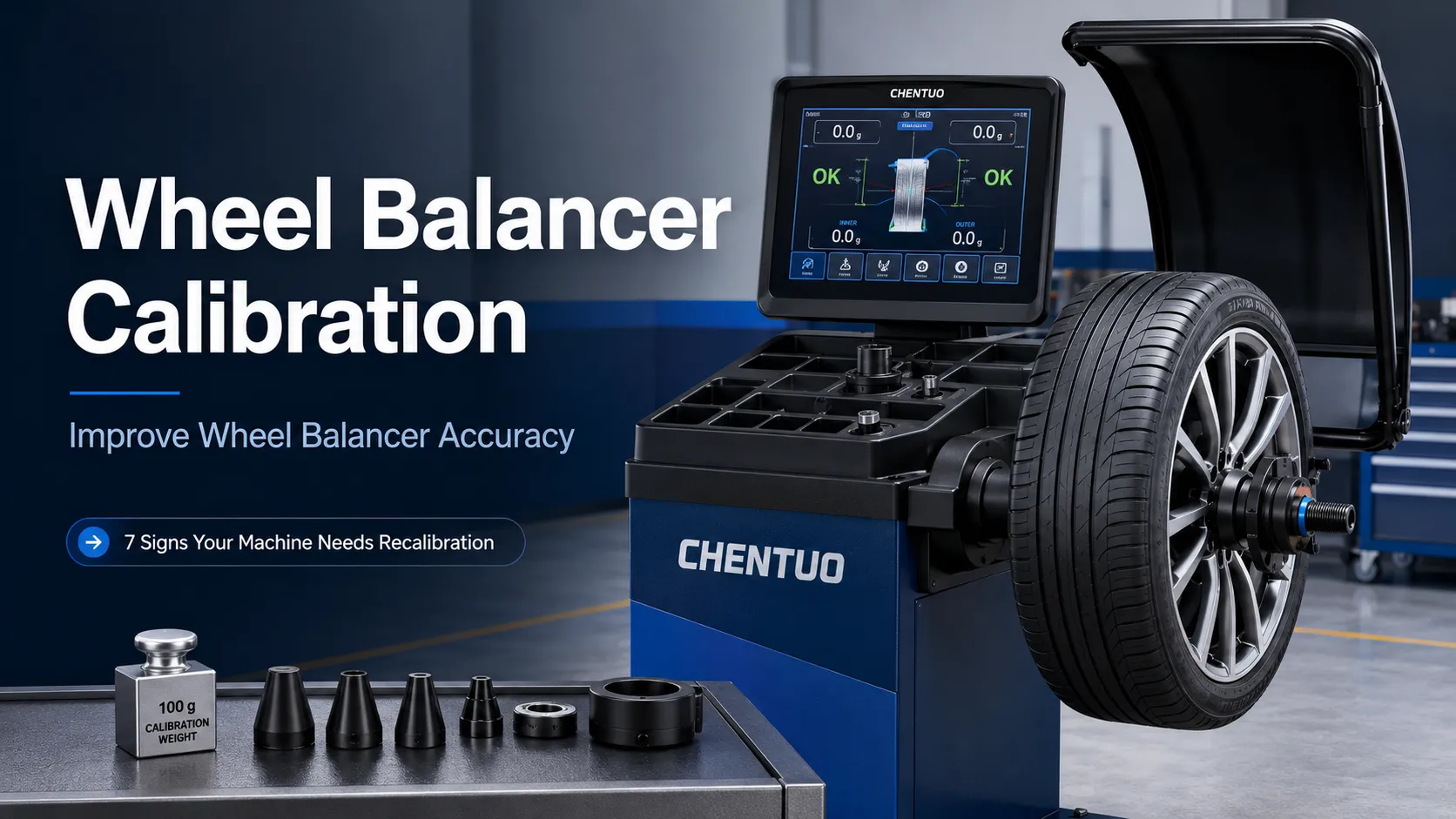
A wheel balancer should be checked whenever its readings become inconsistent and recalibrated according to the manufacturer’s procedure, rather than only on a fixed calendar. For busy tire shops, repair centers, dealerships, fleet workshops, and equipment distributors, a practical policy is to verify wheel balancer accuracy regularly with a clean, known-good wheel and schedule preventive calibration every three to six months, while recalibrating immediately after relocation, impact, sensor or spindle service, or failed repeatability tests. The most important factors are correct wheel centering, clean cones and shaft surfaces, stable installation, accurate rim measurements, and use of the specified calibration weight. This guide explains seven warning signs that indicate recalibration may be needed, how to separate calibration errors from mounting or wheel problems, how to perform verification checks, and what technical and commercial details buyers should confirm when selecting a wheel balancer.
How Often Should a Wheel Balancer Be Calibrated?
There is no single calibration interval that applies to every wheel balancer. The correct schedule depends on the machine model, daily workload, installation conditions, operator practices, maintenance history, and manufacturer instructions.
Some modern machines are calibrated at the factory and do not require immediate recalibration after delivery. Recalibration may only be necessary when the machine produces repeated incorrect results. Other models require a calibration or verification procedure after installation, relocation, major service, sensor replacement, spindle repair, or another event specified in the operating manual.
A practical workshop schedule is:
| Workshop condition | Recommended action |
|---|---|
| Before normal daily operation | Inspect the shaft, cones, adapters, power supply, and machine stability |
| Weekly or after heavy use | Perform a repeatability check using a known-good wheel |
| Every three to six months | Consider preventive calibration for high-volume workshops |
| After moving the machine | Verify installation and perform calibration when required by the manual |
| After an impact or overload | Stop operation, inspect the spindle and adapters, and check accuracy |
| After sensor, spindle, board, or measurement-arm repair | Perform the applicable calibration procedure |
| After repeated inconsistent readings | Troubleshoot mounting first, then recalibrate if necessary |
| After a failed verification test | Do not continue customer work until the cause is corrected |
The three-to-six-month interval is a preventive maintenance policy rather than a universal manufacturer requirement. A lightly used machine in a stable environment may remain accurate for longer, while a high-volume tire shop may need more frequent checks.
The operating manual for the specific machine must always take priority over a general schedule.
What Does Wheel Balancer Calibration Actually Correct?
Wheel balancer calibration aligns the machine’s measuring system with its spindle position, sensors, software calculations, and measurement arms.
During operation, the machine must determine:
- The amount of imbalance
- Whether the imbalance is on the inner or outer correction plane
- The angular position where the weight should be installed
- The wheel’s distance from the machine
- The rim diameter
- The rim width
- The correct correction mode for steel or alloy wheels
A calibration procedure may use a known wheel, a specified calibration weight, or a dedicated calibration tool. For example, some machines use a 100-gram or 3.5-ounce calibration weight, but this value is not universal and must not be assumed for every model.
Correct calibration supports wheel balancer accuracy, but it cannot compensate for:
- A bent spindle
- Worn bearings
- Damaged cones
- Dirty mounting surfaces
- Incorrect wheel centering
- A bent rim
- Tire or wheel radial runout
- Incorrectly entered dimensions
- Improper balancing-weight placement
Before recalibrating, technicians should confirm that the problem is not caused by mounting, maintenance, or wheel condition.
What Level of Wheel Balancer Accuracy Does a Workshop Need?
Wheel balancer accuracy should not be judged only by the smallest number shown on the display.
A machine may display results in one-gram or five-gram increments, but useful workshop accuracy also depends on:
- Repeatability between consecutive spins
- Correct weight-position indication
- Stable wheel mounting
- Correct inner and outer correction planes
- Accurate distance, diameter, and width measurements
- Proper spindle and cone condition
- Appropriate wheel adapters
- Operator technique
For a practical repeatability test, mount a known-good wheel correctly, enter or measure its dimensions, and complete several spin cycles without changing the mounting position.
The displayed correction values should remain reasonably consistent. The acceptable variation must be based on the machine specification and service manual.
Next, remove the wheel, rotate its mounting position on the shaft, remount it carefully, and repeat the test. A major change may indicate:
- Poor centering
- Contaminated mating surfaces
- A worn cone or adapter
- Wheel-center damage
- Spindle runout
- Calibration drift
Do not recalibrate repeatedly until the display reaches the preferred result. An incorrectly completed calibration can make the machine less accurate.
Sign 1: The Same Wheel Produces Different Results on Repeated Spins
The clearest warning sign is poor repeatability.
If the wheel remains mounted and the machine shows significantly different weight values after each spin, check the following before performing wheel balancer calibration:
- Is the wheel securely tightened?
- Is the correct cone or adapter being used?
- Are the shaft, cone, pressure cup, and wheel center clean?
- Are the entered wheel dimensions correct?
- Is the machine standing securely on a stable floor?
- Is the wheel visibly bent or damaged?
- Are the balancing weights secure?
When these conditions are correct but the readings continue to change, the calibration, sensor system, spindle, or internal components may require inspection.
A reliable machine should provide repeatable results under the same mounting conditions.
Sign 2: The Recommended Weight Position Moves Between Spins
A wheel balancer must identify both the required correction weight and its angular position.
Recalibration may be necessary when the display repeatedly directs the operator to different positions around the rim, even though the wheel has not been removed or changed.
Possible causes include:
- Calibration drift
- Sensor instability
- Encoder or position-system problems
- A loose wheel
- Spindle or bearing movement
- Electrical interference
- Incorrect operating mode
Before recalibration, verify that the wheel is centered and the hub nut is correctly tightened.
If the weight position changes only after the wheel has been removed and remounted, centering and adapter selection should be investigated first.
Sign 3: A Previously Balanced Reference Wheel Shows New Imbalance
Keeping a known-good reference wheel in the workshop is a useful way to monitor machine performance. Some equipment manuals specifically recommend retaining a known-good wheel for calibration assistance and troubleshooting.
The reference wheel should be:
- Straight and undamaged
- Correctly balanced
- Free from loose weights
- Clean around the center bore
- Stored where it will not be dropped or exposed to excessive corrosion
- Compatible with the machine’s standard adapters
If this reference wheel previously produced stable results but suddenly requires substantial correction weight, inspect the mounting system and repeat the test.
When the same abnormal result continues, wheel balancer calibration or technical service may be required.
Do not use a badly worn tire, damaged wheel, extremely narrow trailer wheel, or unsuitable assembly as the calibration reference.
Sign 4: The Vehicle Still Vibrates After Balancing
A customer returning with steering-wheel or seat vibration can indicate an inaccurate balance, but vibration does not automatically prove that the wheel balancer needs recalibration.
Possible causes include:
- Incorrect wheel centering during balancing
- Incorrect weight placement
- A balancing weight that has fallen off
- A bent rim
- Tire radial-force variation
- Tire or wheel runout
- Tire flat spotting
- Damaged suspension or steering components
- Incorrect wheel installation on the vehicle
- Dirt or corrosion between the vehicle hub and wheel
- A driveline-related vibration
First rebalance the wheel and check whether the machine produces repeatable results. Inspect the tire and rim and verify that the correct centering adapter was used.
For more information about imbalance-related service symptoms, read Uneven Tire Wear and Dynamic Wheel Balancing.
When several correctly mounted wheels continue to show inconsistent readings, the machine should be verified and recalibrated according to its manual.
Sign 5: The Machine Was Moved, Dropped, Struck, or Repaired
A wheel balancer is a measuring machine, not only a rotating motor and cabinet.
Its accuracy may be affected when:
- The machine is relocated
- The cabinet is struck by a vehicle or heavy tool
- The shaft receives an impact
- A wheel is dropped onto the spindle
- The machine is transported without protecting the shaft
- Bearings or sensors are replaced
- The measurement arm is repaired
- The main control board is replaced
- Electrical repairs are completed
Some machine manuals specifically require calibration after relocation, while others only require a verification check unless incorrect results are observed. The model-specific manual should therefore determine the final procedure.
After moving the machine:
- Install it on a firm and stable surface.
- Check that the cabinet does not rock.
- Inspect the spindle for visible damage.
- Clean all cones and mounting accessories.
- Confirm stable electrical power.
- Perform a reference-wheel test.
- Calibrate when specified by the manufacturer.
Sign 6: Automatic Rim Measurements Become Unstable
Automatic wheel balancers may use measurement arms to detect wheel distance, diameter, and sometimes width.
Wheel balancer accuracy can be affected if these measurements are incorrect or inconsistent.
Warning signs include:
- The displayed diameter does not match the rim
- The distance value changes when the arm returns to the same point
- The width reading is unrealistic
- The arm does not return smoothly
- The machine fails to recognize the arm position
- Multiple incorrect balances occur despite proper centering
- Error codes appear during measurement
Some machines have separate procedures for calibrating the inner arm, outer arm, distance ruler, or diameter measurement system.
Inspect the arm for dirt, impact damage, loose fasteners, cable problems, and incorrect resting position before beginning calibration.
If an automatic measurement system is unreliable, do not continue using its values without checking them manually.
Sign 7: The Calibration Routine Fails or Error Codes Appear
A failed calibration procedure is not a reason to repeat the same steps indefinitely.
Calibration can fail because:
- The wrong wheel was used
- The calibration wheel is damaged
- The wrong calibration weight was used
- The weight was installed on the wrong side
- The weight was placed in the wrong position
- The wheel dimensions were entered incorrectly
- The cone or wheel was not centered
- The sensor output is outside the permitted range
- The spindle, transducer, encoder, or electronic system has a fault
Service manuals show that incorrect calibration-weight mass, incorrect placement, and abnormal sensor outputs can all cause calibration errors.
When calibration fails:
- Stop and review the correct model manual.
- Confirm the required wheel and calibration-weight specification.
- Clean and remount the wheel.
- Repeat the procedure once carefully.
- Record the error code.
- Contact the supplier or service technician if the error remains.
Continuing customer work after a failed calibration may lead to inaccurate weight recommendations and repeat service complaints.
How Can You Test a Wheel Balancer Before Recalibrating It?
A basic workshop verification process can help distinguish calibration drift from an incorrect mounting problem.
Step 1: Inspect the Installation
Confirm that the machine is:
- Positioned on a firm floor
- Stable and not rocking
- Isolated from severe external vibration
- Connected to the correct power supply
- Protected from excessive moisture and contamination
- Installed with enough clearance for safe wheel operation
Step 2: Clean the Mounting Components
Clean:
- The threaded shaft
- Centering cones
- Pressure cup
- Hub nut
- Wheel center bore
- Adapter contact surfaces
Even a small amount of dirt, rust, old adhesive, or metal debris can prevent repeatable centering.
Step 3: Inspect the Accessories
Look for:
- Damaged cone surfaces
- Worn threads
- A cracked pressure cup
- Bent adapters
- Missing protective parts
- Excessive spindle play
Damaged mounting accessories should be replaced rather than compensated for through repeated calibration.
Step 4: Use a Known-Good Wheel
Select a straight wheel and tire assembly in good condition.
Enter or measure:
- Distance
- Rim width
- Rim diameter
Follow the operating manual and complete multiple spins.
Step 5: Test Repeatability
Record the displayed inner and outer correction values after each spin.
If the values remain stable, calibration may not be the cause of a customer complaint.
Step 6: Remove and Remount the Wheel
Rotate the wheel’s position on the shaft, remount it, and test again.
A large change after remounting usually points to a centering, adapter, wheel-center, or spindle issue.
Step 7: Perform the Manufacturer’s Verification Procedure
Some machines provide a dedicated accuracy or weight-position verification test using a specified calibration weight.
Use only the weight size, location, sequence, and wheel type stated in the manual.
How Should a Wheel Balancer Be Calibrated?
The exact key sequence and calibration procedure differ by model. Never apply instructions from an unrelated wheel balancer simply because the machines look similar.
A typical procedure may involve:
- Cleaning the spindle, cone, and calibration wheel
- Mounting a specified steel wheel
- Entering the correct wheel dimensions
- Selecting calibration mode
- Spinning the wheel without the calibration weight
- Installing a specified weight at a defined position
- Completing one or more additional spins
- Removing or relocating the weight when instructed
- Waiting for the calibration-complete message
- Performing a verification spin
The calibration wheel, weight, and sequence must match the manual. Manufacturer procedures may use a known steel wheel and a 100-gram weight, but other systems may use a different wheel or dedicated calibration tool.
Calibration should be performed by a trained operator or service technician. Do not open the electrical cabinet or adjust internal sensors unless authorized and qualified to do so.
What Workshop Conditions Affect Wheel Balancer Accuracy?
Floor and Machine Stability
A machine that moves or rocks during a spin may produce unreliable measurements.
The installation area should have:
- A firm floor
- Adequate load capacity
- No loose platform or unstable base
- Sufficient working clearance
- Minimal external vibration
Temperature and Moisture
Avoid installing precision electronic equipment next to:
- Wash bays
- Direct water spray
- Strong heat sources
- Open exterior doors with extreme temperature changes
- Areas with excessive condensation
Follow the environmental limits stated by the manufacturer.
Electrical Supply
The supplied voltage, phase, and frequency must match the machine configuration.
Voltage instability, poor grounding, damaged cables, and electrical interference may affect machine reliability or damage electronic components.
Cleanliness
Tire shops naturally produce:
- Rubber dust
- Old wheel-weight adhesive
- Road dirt
- Rust
- Lubricant residue
- Metal particles
A routine cleaning schedule protects the shaft, adapters, display, measurement arms, and moving components.
What Specifications Should Buyers Compare?
When choosing a wheel balancer, buyers should compare the complete operating capacity rather than only the sales price.
| Specification | Why it matters |
| Maximum wheel weight | Determines whether the machine can safely support the intended wheel assemblies |
| Rim-diameter range | Must cover the passenger car, SUV, light truck, or commercial wheels being serviced |
| Rim-width range | Affects compatibility with wide performance tires and commercial wheels |
| Maximum wheel diameter | Confirms physical clearance under the hood and around the cabinet |
| Shaft diameter | Affects compatibility with cones, adapters, and accessories |
| Balancing speed | Influences cycle time, noise, and workshop productivity |
| Display resolution | Determines the smallest displayed correction increment |
| Declared balancing accuracy | Should be verified against the manufacturer’s test conditions |
| Cycle time | Important for high-volume service shops |
| Motor power | Must suit the machine capacity and wheel size |
| Power supply | Must match the destination market |
| Automatic data entry | Can reduce manual input errors |
| Calibration method | Should be clearly explained and supported |
| Safety hood | Helps control wheel operation and may be required in some markets |
| Adapter package | Determines which wheel-center designs can be mounted correctly |
| Machine dimensions | Must fit the planned workshop layout |
| Net and gross weight | Important for installation and freight planning |
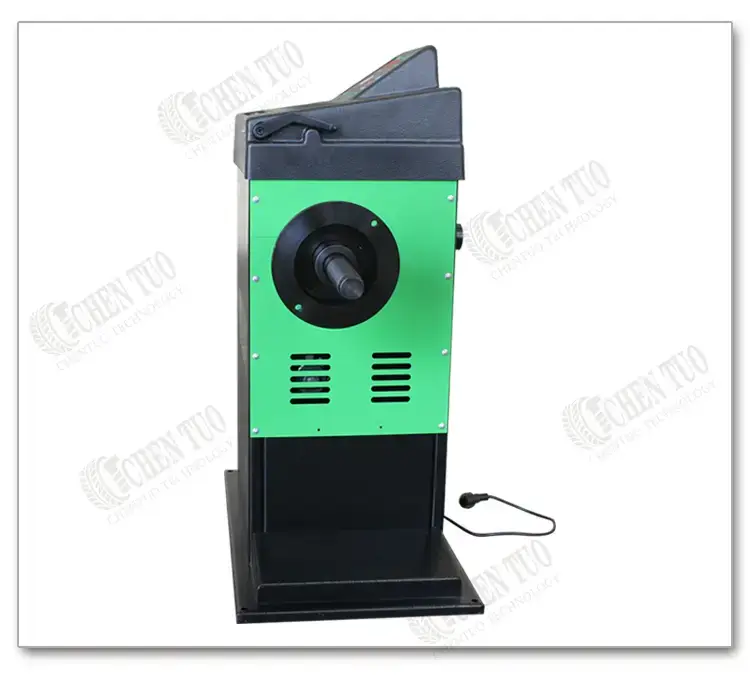
The Chentuo CT9911 Digital Wheel Balancer is listed with a 250 W motor, maximum wheel weight of 60 kg, digital display, and CE-related product positioning. Buyers should confirm the final technical sheet, spindle speed, included accessories, voltage, and documentation before ordering because specifications may vary by configuration.
Which Standards and Certifications Should Buyers Confirm?
Certification requirements depend on the destination country, machine configuration, voltage, and sales channel.
Before placing an order, ask for:
- Model-specific CE documentation where applicable
- Electrical diagrams
- Machine nameplate information
- Operating and maintenance manual
- Safety-label language
- Declaration of conformity where required
- Test reports requested by the importer
- Plug and power-cable configuration
- Local distributor or importer documentation requirements
Do not accept a general company certificate as proof that every wheel balancer model and configuration meets the destination-market requirements.
The buyer should review the final document package before shipment.
What Quality-Control Tests Should Be Completed Before Shipment?
A professional wheel balancer supplier should have a documented inspection process.
Recommended checks include:
Mechanical Inspection
- Cabinet and frame inspection
- Shaft runout check
- Cone and adapter inspection
- Hub-nut operation
- Bearing and spindle movement
- Hood and safety-switch operation
- Fastener inspection
Electrical Inspection
- Voltage and frequency verification
- Motor operation
- Display and keyboard test
- Sensor-response test
- Grounding inspection
- Cable and plug inspection
Accuracy Inspection
- Factory calibration
- Known-wheel verification
- Repeat-spin test
- Weight-value verification
- Weight-position verification
- Inner and outer plane test
- Automatic measurement-arm test where equipped
Final Inspection
- Accessory count
- Label verification
- Manual-language check
- Cosmetic inspection
- Packaging inspection
- Pre-shipment photo or video record
Buyers can request an inspection report or balancing-test video showing the serial-numbered machine before shipment.
What Packaging and Shipping Details Matter?
Wheel balancers contain sensitive shafts, sensors, displays, and electronic components. Export packaging should protect the machine against impact, movement, moisture, and incorrect handling.
Buyers should confirm:
- Export wooden-case or reinforced-crate construction
- Internal steel or timber fixing
- Spindle and shaft protection
- Moisture-resistant wrapping
- Accessory packaging
- Centering-cone protection
- Gross and net weight
- Package dimensions
- Forklift and lifting points
- Loading orientation
- Container-loading quantity
- Destination port
- Incoterm
- Spare-parts package
The spindle should not carry shipping loads, and loose accessories should not be allowed to strike the cabinet during transportation.
After delivery, inspect the packaging before acceptance and photograph any external damage before opening the case.
What Are the MOQ and Customization Options?
MOQ depends on the machine model, inventory status, branding requirements, voltage, plug type, and order structure.
A supplier may support:
- One trial machine
- Mixed-model orders
- Distributor quantities
- Container orders
- OEM color
- Customer logo
- Custom labels
- Manual translation
- Destination-market plug
- Voltage and frequency options
- Accessory-package customization
- Spare-parts kits
Customization usually increases the confirmation and production time. Buyers should provide artwork, electrical requirements, label language, and packaging instructions before production begins.
A written sample or approval document should be confirmed for branded orders.
How Long Does a Wheel Balancer Order Take?
The total project cycle may include:
- Requirement confirmation
- Model selection
- Technical-sheet approval
- Voltage and plug confirmation
- Logo or color approval
- Production or stock preparation
- Calibration and quality inspection
- Packaging
- Export documentation
- Domestic transport and international shipping
Lead time depends on:
- Stock availability
- Order quantity
- Degree of customization
- Component supply
- Inspection requirements
- Packaging method
- Shipping schedule
Chentuo states that it maintains manufacturing capacity and inventory to support product preparation and shipment, but the final delivery schedule should be confirmed for each order.
What Determines the Price of a Wheel Balancer?
The machine price is influenced by more than motor power.
Important price factors include:
- Passenger-car, light-truck, or truck capacity
- Maximum wheel weight
- Rim-size range
- Automatic or manual data entry
- LCD, LED, or digital display
- Laser or light-assisted weight positioning
- Pneumatic wheel lift
- Safety hood
- Number and quality of cones
- Special wheel adapters
- Motor, bearing, sensor, and spindle quality
- Software functions
- Calibration system
- Certification requirements
- Voltage customization
- OEM branding
- Spare-parts package
- Order quantity
- Packaging
- Freight and Incoterm
A low purchase price may become expensive when the machine has poor repeatability, inadequate adapters, weak technical support, or unavailable spare parts.
Buyers should compare the complete delivered and operating cost.
How Should Buyers Evaluate a Wheel Balancer Supplier?
Before ordering, ask the supplier the following questions:
- What wheel sizes and maximum weights can the machine handle?
- What balancing accuracy and display resolution are specified?
- Under what test conditions are those figures achieved?
- How is the machine calibrated?
- What calibration wheel and weight are required?
- Is a calibration video or manual available?
- Which cones and adapters are included?
- Are special adapters available for closed-center or light-truck wheels?
- What inspections are completed before shipment?
- Can a test report or pre-shipment video be provided?
- Which model-specific certificates are available?
- What voltage and frequency options are supported?
- What is the MOQ?
- Which OEM options are available?
- What is the production or delivery time?
- How is the spindle protected during shipping?
- What is covered by the warranty?
- Which spare parts should be purchased with the machine?
- How quickly can technical questions be answered?
- Are wiring diagrams and spare-parts drawings provided?
A reliable supplier should explain the limits of each model and recommend equipment according to actual wheel size, workload, target market, and service application.
Frequently Asked Questions
Does a New Wheel Balancer Need Calibration?
Some wheel balancers are correctly calibrated at the factory and only require installation checks and accuracy verification after delivery. Other models require calibration after installation.
Follow the model-specific manual rather than assuming every new machine requires the same procedure.
Is Every Three Months a Mandatory Calibration Interval?
No. Three months is a preventive schedule that may suit a high-volume workshop. It is not a universal requirement.
The correct interval depends on machine design, workload, operating conditions, verification results, and manufacturer guidance.
Can a Wheel Balancer Be Calibrated Too Often?
Unnecessary calibration is not normally beneficial. If the procedure is performed with the wrong wheel, weight, dimensions, or sequence, it can create inaccurate results.
Verify mounting and repeatability before recalibrating.
Does Recalibration Fix All Vibration Complaints?
No. Vibration may result from tire runout, radial-force variation, bent wheels, incorrect vehicle mounting, suspension faults, wheel alignment, or driveline problems.
Calibration only addresses the balancer’s measuring system.
What Calibration Weight Should Be Used?
Use only the weight specified in the machine manual. Some models use 100 grams or 3.5 ounces, while other machines use different calibration tools.
Why Does the Result Change After Remounting the Wheel?
The most likely causes are centering errors, dirty mounting surfaces, damaged cones, incorrect adapters, wheel-center damage, or spindle runout.
Check these items before recalibrating.
When Should a Service Technician Be Contacted?
Request technical service when:
- Calibration repeatedly fails
- Error codes remain
- The spindle is visibly damaged
- Bearings have excessive movement or noise
- Sensor readings are unstable
- The measurement arm cannot be calibrated
- The machine does not pass the verification test
- Electrical faults are suspected
Maintain Reliable Wheel Balancer Accuracy
A wheel balancer should not be recalibrated only because a calendar date has arrived. It should be monitored through routine inspection, clean mounting practices, a known-good reference wheel, repeatability tests, and the manufacturer’s prescribed calibration procedure.
Recalibrate when the machine fails an accuracy check, produces repeated inconsistent results, has been moved or repaired, experiences an impact, or displays calibration-related errors.
When requesting a wheel balancer recommendation or quotation, provide Chentuo with:
- Passenger-car, SUV, light-truck, or truck application
- Minimum and maximum rim sizes
- Maximum wheel weight
- Estimated daily workload
- Required accuracy and functions
- Available voltage and frequency
- Required adapters
- Order quantity
- Destination country or port
- Certification requirements
- OEM customization needs
Contact Chentuo to receive a suitable wheel balancer recommendation, technical specification, calibration information, packaging details, and quotation for your repair shop or distribution market.