How to Determine What Tire Size Fits a Tire Changer
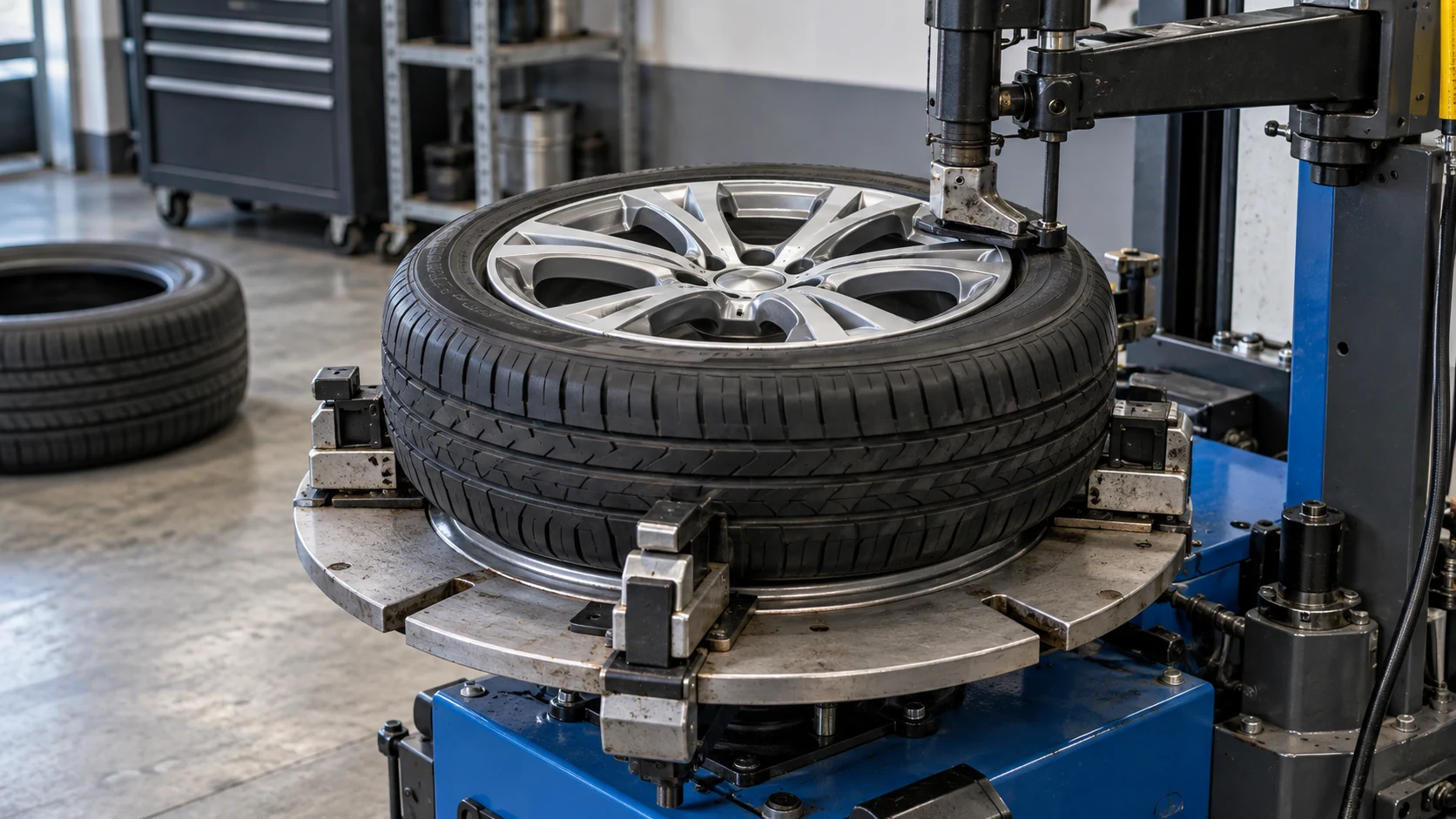
Quick answer: Start with the wheel’s rim diameter, then check whether that diameter falls within the tire changer’s specified clamping range for the clamping method you intend to use. Next, check the complete mounted tire’s outside diameter and width against the machine’s limits. Finally, consider wheel design, tire stiffness, vehicle application, and the machine’s available tools. A rim that fits between the jaws does not, by itself, prove that the complete tire and wheel assembly can be serviced safely.
Read the tire size, but focus on the right number
A tire marked 225/45R17 has a nominal section width of 225 mm, an aspect ratio of 45%, radial construction, and a bead seat diameter for a 17-inch rim. The last number is the starting point when comparing the wheel with a tire changer’s rim clamping specification. The 225 mm width is the tire’s nominal section width; it is not a direct measurement of wheel width or the width of the mounted assembly.
This distinction matters because a listing described as a “24-inch tire changer” normally points to a rim handling or clamping figure, not a promise that the machine accepts tires whose complete outside diameter measures only 24 inches. The exact meaning of the number must be checked on that model’s specification sheet. Tire markings help identify the rim bead seat diameter, but the actual assembly should still be measured when clearance is close or the tire size is unusual.
For a rough sense of scale, a nominal 225/45R17 tire has a calculated outside diameter of about 25 inches: 17 inches for the rim plus two sidewalls of roughly 101 mm each. Its actual mounted diameter depends on the tire design and measuring conditions. Comparing that approximately 25-inch overall tire diameter with a “17-inch rim” entry in a machine specification would compare two different dimensions.
Which tire changer clamping range applies?
On a conventional rim clamp tire changer, the jaws may grip the wheel from its outside edge or expand against its inside edge. Manufacturers often specify separate outside and inside clamping ranges. Use the range for the intended setup and the actual wheel, including its lip shape and contact surfaces. Do not combine the lowest number from one method with the highest number from the other to invent a broader operating range.
A concrete example appears on Chentuo’s 703 pneumatic tire changer product page: it lists 12–24 inches for inside clamping and 10–21 inches for outside clamping. A 17-inch rim falls numerically inside both published ranges. A 23-inch rim falls within the listed inside range but outside the listed outside range. That observation does not confirm that a particular 23-inch wheel can be gripped securely or that its mounted tire clears the machine: the clamp position, rim design, wheel width and other rated capacities still need checking.
Check the whole assembly, not just the rim
The tire changer rim size range answers one question: can the intended clamping arrangement accommodate that rim size? It does not answer whether the assembled tire can rotate freely, whether the bead breaker can reach and move the bead, or whether the mount/demount head can clear the wheel. For those questions, check the model’s maximum mounted tire diameter and its specified maximum wheel or tire width. Product sheets use those width terms differently, so match the manufacturer’s exact definition to what you measure.
Measure the outside diameter across the fully mounted tire. Check the assembly width, taking account of sidewall bulge, a wide rim, or a wheel design that changes access to the bead. Compare those measurements with published machine limits, including whether accessories affect usable capacity. A tire marked 225/45R17 and a much taller SUV tire could both use 17-inch rims while requiring very different physical clearance. Equally, two tires with similar outside diameters could use different rim diameters and therefore sit differently in the jaws.
The bead breaker deserves its own check. It must reach the bead area without striking the wheel or a protruding component, and it must have an appropriate working arrangement for the tire type. Clearance at the turntable alone does not establish that bead breaking and mounting can be performed properly.
Why low-profile and run-flat tires change the answer
A low-profile tire leaves less flexible sidewall between the bead and tread. A run-flat design may have a stiffer sidewall. Even when the rim is inside the clamping range and the assembled tire is below the size limits, the bead can be harder to guide into the rim’s drop center during mounting. If the bead stays on the rim shoulder, extra force on the opposite side can stress the tire or wheel.
For this work, check the machine’s supported procedure and whether the quoted configuration includes a helper arm, bead press, suitable mount/demount tooling and rim protection. The technician’s technique and the tire maker’s servicing instructions remain relevant. An accessory listed for one configuration should not be assumed present on every tire changer in the same product family.
Wheel finish and construction also matter. A decorative face, unusual lip, exposed TPMS components or a delicate rim surface can affect how the wheel is held and how tools approach the bead. The practical question is therefore broader than “does a 19-inch tire fit a 19-inch-capable tire changer?” It is whether the specific assembly and service method fit the selected machine.
A five-step compatibility check for your workshop
- Identify the wheel. Read the tire sidewall to find the rim bead seat diameter, then confirm the actual rim specification and wheel construction.
- Choose the clamping method. Compare the rim diameter with the machine’s published inside or outside clamping range, as appropriate. Check whether the rim offers a suitable, protected jaw contact area.
- Measure the mounted assembly. Compare its actual outside diameter and relevant width with the machine’s separately stated limits; confirm what each quoted width means.
- Check the service operation. Consider bead breaker access, mount/demount head clearance, low-profile or run-flat construction, and any needed assist tools.
- Verify the exact configuration. Use the model’s current specification and operating instructions, then confirm a representative wheel and tire combination with the supplier if a dimension is near a limit or the design is unusual.
This process answers “what size tires can a tire changer handle?” more reliably than reading the largest inch value in a listing. It also prevents a common purchasing error: selecting a machine with a generous rim clamping range that still cannot accommodate the shop’s wider or taller assemblies.
Example: Will a 225/45R17 fit a 12–24 inch tire changer?
Its 17-inch rim diameter is within a stated 12–24-inch rim clamping range. That establishes only the first numerical comparison. It does not establish which clamping method the range describes, whether the actual wheel can be held without damage, or whether the complete tire assembly falls within maximum diameter and width limits. The nominal 225 mm tire section width cannot be substituted for a machine’s maximum wheel width without checking the definitions.
If the machine also has a separately stated 10–21-inch outside range, as the Chentuo 703 page does, the 17-inch rim is numerically within that range too. A technician or buyer must still inspect the wheel’s contact surface and the intended service method. For a stiff low-profile or run-flat tire, confirm the appropriate assist equipment and procedure before assuming the job is suitable merely because the numbers overlap.
What size tire changer does a repair shop need?
Begin with the mix of assemblies actually serviced, rather than a model’s highest advertised rim number. A passenger-car tire shop should identify its common rim sizes as well as the largest tire diameter and widest assembly it routinely encounters. A shop that handles SUVs and pickups should check physical clearance and bead breaker access in addition to rim clamping. A workshop with frequent low-profile or run-flat work needs the right assist configuration and training, even if those wheels occupy familiar rim sizes.
Motorcycle and ATV wheels require attention to their geometry and the availability of compatible adapters or dedicated equipment. Heavy truck, agricultural and industrial tire service may call for a separate machine design with its own chuck, handling arrangement and rated assembly capacity. An overlapping rim size on a passenger-car machine is not proof of truck tire capability. Explore the available Chentuo tire changer range by the intended vehicle and wheel applications before comparing individual specifications.
There is a practical difference between occasional maximum capacity and a machine that works comfortably across the shop’s daily jobs. Where most of the work involves stiff sidewalls or large assemblies, tool access, handling effort and the relevant accessories can matter more to everyday service than a small increase in the maximum rim figure.
How to confirm a model before ordering

When asking a tire changer manufacturer about fit, send one or two representative tire size markings together with the actual mounted outside diameter, wheel width, rim type, vehicle application, and any run-flat or low-profile requirements. Ask which clamping method is suitable and whether the offered configuration includes the assist tools or adapters needed for those assemblies. Request the model’s current, separate specifications for inside clamping, outside clamping, maximum assembled tire diameter and width. This allows a model recommendation to be checked against the work the shop will actually perform.
Chentuo manufactures tire service equipment for different workshop applications. The 703 specification illustrates why separate clamp figures should be read carefully; it is one reference point, not a universal specification for the full range. If your shop has an unusual wheel or mixed vehicle workload, contact Chentuo with representative assemblies to verify the current model and supplied configuration.
Frequently asked questions
Does a tire changer size refer to the tire’s overall diameter?
Usually a quoted inch range describes the rim diameter accepted by a particular clamping arrangement. The maximum outside diameter of the mounted tire, when specified, is a separate limit. Always check the wording on the actual model sheet.
Can a 24-inch tire changer handle every 24-inch wheel?
No. Confirm whether 24 inches is the inside or outside clamping limit, and whether the wheel profile can be held correctly. Then check the assembled tire’s diameter and width, tool clearance and tire construction. A maximum figure alone cannot confirm every wheel at that size.
Can the same tire changer service car and truck tires?
Only if its current specifications, handling design and instructions explicitly cover the truck assemblies in question. Passenger-car and heavy truck machines can differ substantially even when some rim diameters overlap.
Do run-flat tires always need a special tire changer?
They require a compatible service procedure and suitable tools for their construction. An assist arm or bead press may help keep a stiff bead in the drop center, but compatibility must be checked for the exact machine, wheel and tire rather than assumed from rim diameter alone.