Scissor Car Lift Platform Design: What Buyers Must Check for Service Access
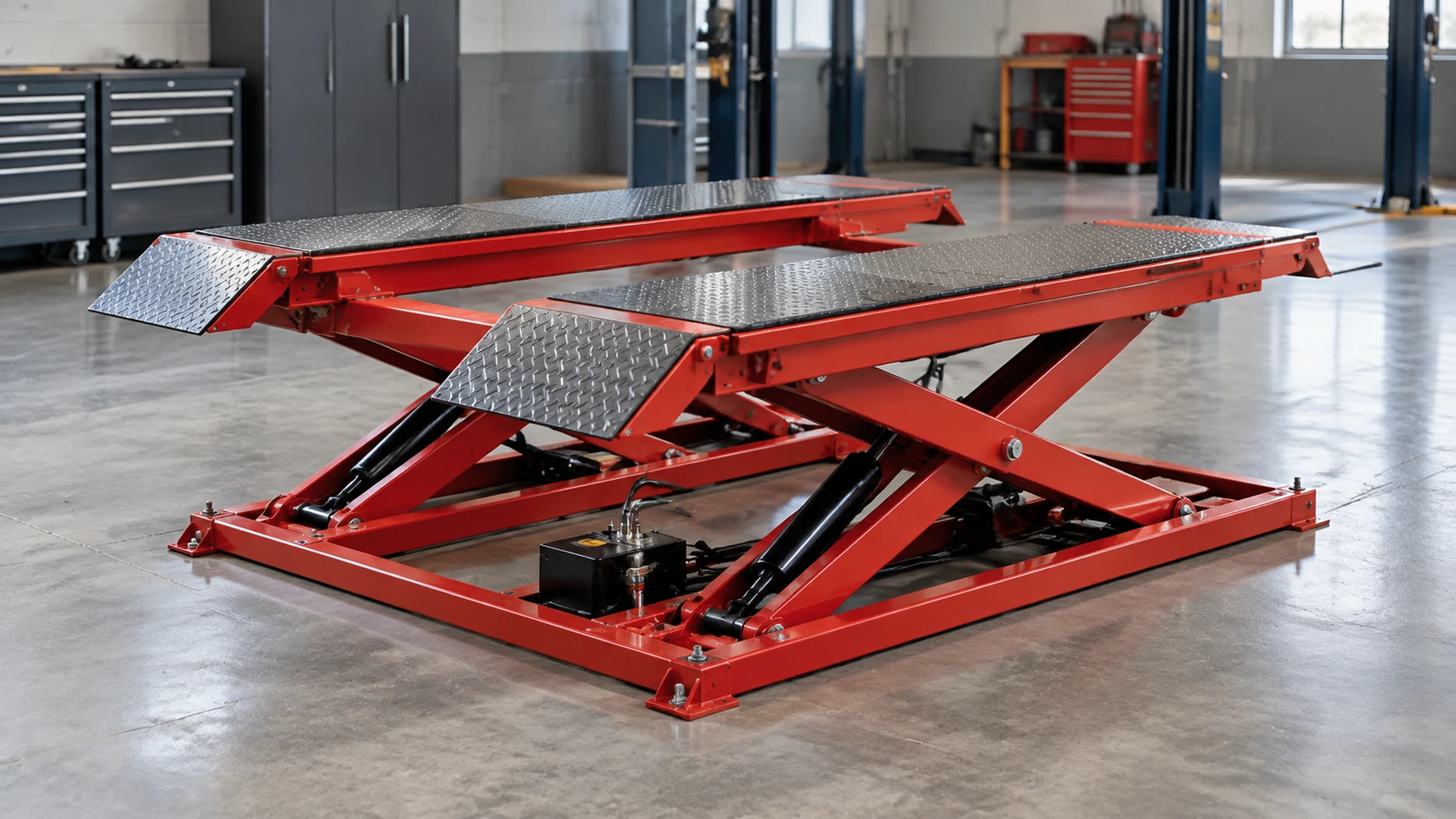
A scissor car lift should be selected according to the vehicles it will support, the required support arrangement and the repair tasks technicians need to perform. Rated lifting capacity and maximum lifting height are important, but neither confirms that a particular platform is suitable for wheel service, underbody inspection or other maintenance work. Buyers must also evaluate the platform’s usable support area, vehicle positioning, working height and access to the intended service points.
For automotive equipment distributors and workshop planners, the key question is not simply whether a scissor car lift can raise a vehicle. It is whether the specific model can accommodate the target vehicle and provide the access required for the planned work. This assessment should be based on the vehicle manufacturer’s guidance, the lift manufacturer’s documentation and the actual product drawing—not assumptions based on the machine’s appearance.
CHENTUO’s CT606 hydraulic scissor lift is one product buyers can evaluate against these requirements. Its published product title identifies a 3-ton capacity and a 1,000 mm lifting height. Platform dimensions, support arrangement and permitted applications should be confirmed from the specification for the exact configuration.
1. How Does a Scissor Car Lift Platform Affect Vehicle Support?
The scissor mechanism describes how the lift raises and lowers its platform. It does not, by itself, establish how a vehicle must be supported or which repair tasks the equipment can accommodate. Platform design, contact points and vehicle position must be considered together.
Identify the Vehicle’s Required Support Points
Identify the vehicles the workshop expects to service and determine their approved lifting or support points from the vehicle manufacturer’s documentation. Record representative vehicle models, weight and dimensions, approved support points, target service areas and any vehicle-specific restrictions.
Rated capacity is a limit within specified operating conditions, not a universal statement that every vehicle below that weight can be positioned and supported in every way. The support arrangement must be compatible with both the vehicle and the lift manufacturer’s instructions.
Separate Platform Fit from Service Access
Platform fit concerns whether the vehicle can be positioned and supported as intended. Service access concerns whether technicians can reach the components they need to inspect or repair after the vehicle is raised. Wheel-related service, underbody inspection and routine maintenance may require different access conditions. Do not assume that every scissor lift provides the same access beneath a vehicle.
2. Which Platform Dimensions Must Buyers Verify?
Overall product dimensions do not necessarily describe the usable support area. Obtain the manufacturer’s dimensioned drawing and identify which measurements determine whether the target vehicle can be positioned correctly.
Check Platform Length and Width Against the Vehicle
Review platform length and width alongside the vehicle’s relevant dimensions and approved support locations. Confirm actual platform dimensions, usable support area where specified, the relationship between platform dimensions and support points, positioning requirements and whether the drawing matches the quoted configuration. Do not estimate dimensions from photographs.
Understand Overall Size and Usable Support Area
The external dimensions of a platform do not necessarily indicate where a vehicle may be supported. The manufacturer’s drawing and instructions should define the relevant support arrangement. If those documents do not clearly identify the usable area, request clarification before approving the model.
| Verification item | What buyers should confirm | Why it matters |
|---|---|---|
| Platform length | Actual dimension from the manufacturer’s drawing | Helps establish whether the vehicle can be positioned as required |
| Platform width | Actual width and defined support limitations | Helps assess vehicle placement |
| Support arrangement | Approved contact points and positioning requirements | Prevents assumptions based only on appearance |
| Vehicle dimensions | Relevant dimensions of representative vehicles | Connects equipment selection to workshop needs |
| Service access | Areas technicians must reach | Determines whether the configuration suits the task |
3. How Should Buyers Evaluate Wheel Access and Underbody Work Separately?
Service access covers different tasks. A lift suitable for one operation may not provide the same access for another.
Define the Intended Repair Task Before Comparing Models
List the work the workshop expects to perform, identify the areas technicians need to reach, and establish the support arrangement required for the vehicle. Ask which part must be accessed, which support points are permitted, whether the platform obstructs the work area, whether the manufacturer identifies the configuration as suitable, and whether additional equipment is required.
Do Not Treat Wheel Service and Underbody Access as Identical
Wheel service and underbody work can require different support and access conditions. A platform suitable for positioning a vehicle does not automatically provide unrestricted access to its wheels or underside. Do not conclude that a scissor lift is categorically better or worse than a two-post or four-post lift; judge suitability against the actual vehicle and task.
4. How Does Working Height Affect the Technician’s Position?
Maximum lifting height is important, but it does not independently establish whether the lift provides the working position required for a task.
Distinguish Minimum Height, Maximum Rise and Usable Working Height
Distinguish the platform’s lowest or drive-on position, the maximum lifting position stated for the model and the working height needed for the task. Confirm how the manufacturer defines each measurement and whether it applies to the quoted configuration. The CT606 product title lists a 1,000 mm lifting height; confirm the measurement reference and operating limits in the current specification.
Check Vehicle Height and Workshop Clearance at the Raised Position
Consider the target vehicle’s overall height, the lift’s raised position, overhead beams, doors, lighting and other fixed obstacles, operator working area, and any additional clearance required by the manufacturer. Required overhead space depends on the vehicle, lift and task, so use actual dimensions rather than a generic ceiling-height recommendation.
5. Which Workshop Conditions Should Be Confirmed Before Selecting a Model?
Review the Installation Drawing and Site Conditions
Check the workshop layout against the selected lift’s installation drawing. Verify the installation area, floor and foundation conditions where applicable, available height, vehicle approach and surrounding obstacles. A machine may fit within the floor area but still be unsuitable if vehicle access or technician movement is restricted.
Resolve Unconfirmed Installation Requirements Before Ordering
If the drawing does not identify a required dimension, mounting condition or clearance, ask the supplier to clarify it. The final specification should identify the approved configuration and site conditions required before installation. A replacement lift must be checked against its own requirements rather than the footprint of the old equipment.
6. What Should Buyers Request from the Supplier Before Approval?
| Information | What to verify |
|---|---|
| Exact model | Model name and quoted configuration |
| Rated capacity | Published capacity and operating conditions |
| Platform drawing | Actual length, width and structural details |
| Vehicle support requirements | Approved support points and positioning instructions |
| Height specification | Minimum position, maximum rise and measurement references |
| Installation requirements | Floor, mounting, clearance and utility requirements |
| Operating instructions | Permitted use and relevant restrictions |
| Supply scope | Included components, accessories and documentation |
For the CHENTUO CT606 hydraulic scissor lift, request the current dimensioned drawing and operating documentation if these details are not available in the public product information. General assurances about capacity or workshop suitability do not replace model-specific confirmation.
Conclusion
Selecting a scissor car lift for service access requires more than comparing rated capacity and maximum lifting height. Buyers must identify the vehicles and repair tasks, verify the permitted support arrangement, compare usable platform dimensions with the vehicle, and confirm working height and installation conditions.
The CT606 product title identifies a 3-ton capacity and a 1,000 mm lifting height. These details are a starting point, but buyers should confirm platform dimensions, support requirements and permitted applications using current product documentation. A reliable decision is based on a defined service task, actual vehicle dimensions and a verified product drawing—not assumptions from a product name or photograph.
For product information, visit the CT606 product page or contact CHENTUO to confirm the configuration and installation requirements for your application.