Truck Wheel Balancers: Matching Wheel Load, Size and Mounting Setup
A truck wheel balancer must be chosen for the complete wheel assembly—not for the tire size or a headline weight rating alone. Before ordering, a workshop should check the heaviest tire-and-rim assembly it services, the largest outside diameter, rim width, centering method, spindle and adapter configuration, and how the wheel will be loaded. A machine described as supporting a 150 kg wheel is not automatically compatible with every 150 kg truck wheel: mounting geometry and the manufacturer’s operating limitations can be equally decisive.
This guide explains how commercial tire-service buyers can translate their actual wheel inventory into a verifiable equipment specification. It focuses on load, dimensional clearance and mounting repeatability, rather than repeating generic advice on wheel-balancer calibration.
What Makes Truck Wheel Balancing a Different Equipment Decision?
The wheel assembly on a bus or truck can place a substantially different demand on a balancing machine from a passenger-car assembly. More mass must be supported by the spindle and locating accessories, the tire can occupy more space under the safety hood, and the geometry of the wheel center may call for a different clamping arrangement. The assembly includes both tire and rim; the tire’s catalog weight by itself is not the figure to compare with the balancer’s stated maximum wheel weight.
Also distinguish the wheel’s outer tire diameter from its nominal rim diameter. A nominal wheel size identifies one aspect of the rim, not the complete rotating envelope. Two tire assemblies with the same rim diameter may have markedly different outer diameters, widths and total masses. Consequently, buyers should prepare a list of representative and worst-case wheel assemblies rather than relying on a vehicle category such as “truck.”
How Should Maximum Wheel Weight Be Evaluated?
Weigh the complete assembly
The comparison should use the assembled wheel as presented to the balancing machine, including its tire, rim and installed components. If the workshop handles several commercial vehicle types, the maximum observed mass and realistic future workload need to be recorded. The equipment’s published limit must cover that assembly under the manufacturer’s specified working conditions.
Confirm the whole load path
The main shaft is not the only component that matters. Cone or flange adapters, spacers, clamping elements and any wheel-lifting attachment must also be rated and correctly configured. A heavy wheel mounted with an unsuitable locator can introduce eccentricity or inadequate retention even when its mass is below the machine’s maximum.
Plan lifting and unloading separately
Loading a commercial wheel is an equipment-handling task. Confirm whether a lift or integrated wheel support is included, its permissible travel and capacity, and how the operator can place the wheel on the spindle without relying on uncontrolled manual lifting. Do not infer loading safety solely from a balancer’s measurement specifications.
Which Wheel Dimensions Define Mechanical Compatibility?
A balancer’s maximum wheel diameter is only the first check. The complete fit assessment includes rim width, spindle reach, hub opening, wheel offset and hood clearance. An assembly can satisfy the outside-diameter limit yet still be impractical to mount if the required clamping components do not fit or the wheel projects beyond the working envelope.
| Dimension or interface | Why it matters | Evidence to obtain |
|---|---|---|
| Complete outside diameter | Clearance under the protective hood and surrounding machine | Model-specific maximum and physical layout |
| Complete assembly weight | Spindle, adaptor and lifting loads | Rated wheel capacity and approved handling method |
| Rim width and offset | Spindle reach and clearance from cabinet or hood | Approved rim-width range and mounting arrangement |
| Center bore and mounting faces | Concentric location and repeatable clamping | Adapter part numbers and wheel compatibility matrix |
| Wheel fastening geometry | Whether hub-centric or alternative centering is required | Approved centering and clamping instructions |
Why Is Wheel Mounting as Important as Machine Capacity?
A balancing machine measures imbalance around its rotational axis. If the wheel is mounted off-center, the measurement can reflect mounting error rather than the wheel’s true condition. Dirt, rust, damaged contact surfaces, incorrect cone selection and inconsistent clamping can all impair repeatability. Heavy assemblies make careful locating particularly important because the wheel must remain secure throughout the measurement cycle.
Centering is not the same as tightening
Firm clamping does not correct a mismatched centering part. The proper wheel interface must establish the intended axis before the assembly is secured. Some wheels need a specific flange arrangement rather than a generic cone. Buyers should request an approved adapter list for their actual wheel types, including relevant shaft dimensions and any dedicated spacers or pressure elements.
A practical repeatability check
As part of an approved equipment demonstration, staff can compare repeat measurements after removing and correctly remounting a representative wheel, following the manufacturer’s instructions. Large changes can justify investigation of centering, contact surfaces, operator procedure or machine condition. This is a process check, not an invented accuracy certification for the supplier.
What Does CHENTUO Publish for the CT-9912?
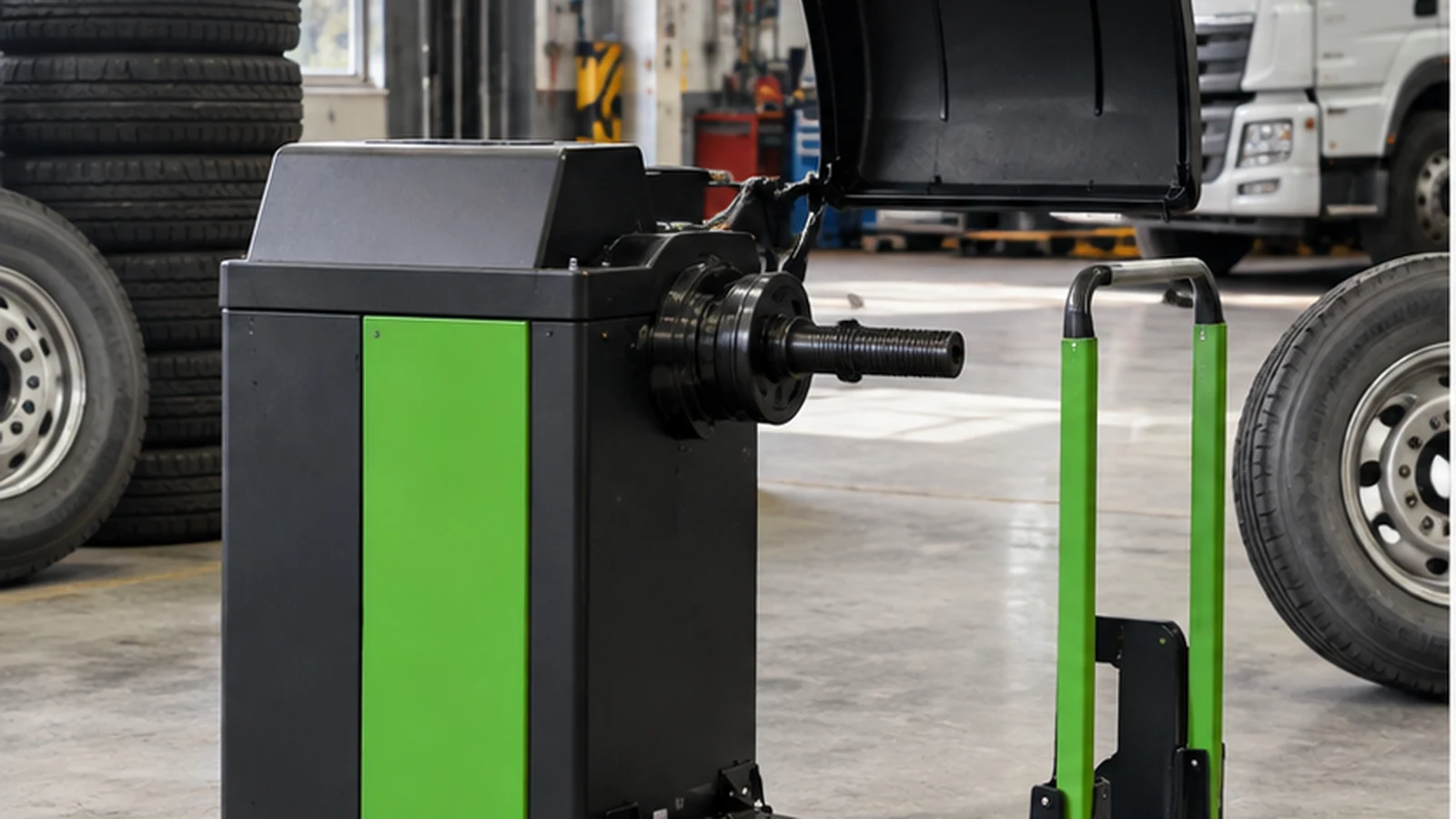
CHENTUO presents the CT-9912 automatic truck and bus wheel balancer with a headline maximum wheel weight of 150 kg, maximum wheel dimension of 1200 mm and 220 V power information. Its page also describes a lengthened and thickened spindle and a high-density nylon protective cover. These are published descriptions of the particular model, not performance claims for all CHENTUO balancers.
The same listing contains a “7S Equilibrium” statement. Buyers should not interpret that as a guaranteed seven-second end-to-end wheel service process: loading, selecting adapters, entering wheel information, running a measurement, applying correction weights and performing a final check are separate operations. The current product description does not establish a complete adapter compatibility matrix, exact width limits or a validated accuracy figure for every truck-wheel configuration. Obtain those in the final datasheet and manual.
How Should Buyers Interpret Balancing Cycle Claims?
The rotating measurement stage is only one part of the service sequence. A workshop may spend more time handling and securing a wheel than the balancer spends measuring it. A useful equipment assessment therefore times the complete controlled workflow and records the operations performed, rather than comparing catalog seconds without context.
| Workflow stage | Selection or inspection concern |
|---|---|
| Load the wheel | Wheel-lift capacity, floor route and worker access |
| Center and clamp | Approved adapters, contact surfaces and security |
| Enter wheel data | Correct rim dimensions and available measuring modes |
| Measure | Protection, machine condition and safe operation |
| Correct and recheck | Weights, fitting clearance and repeatable final result |
Which Workshop Conditions Can Rule Out an Otherwise Suitable Machine?
Electrical supply should be matched to the exact ordered version, not a generalized country setting. Check voltage and frequency, power connection, floor level and the equipment manufacturer’s installation requirements. Leave sufficient space for the full protective hood movement, the lift or handling attachment, wheel loading and operator movement.
Large wheels may require dedicated staging space for removal, cleaning and inspection. Buyers should also plan where approved adapters and wheel weights will be stored, because mismatched or damaged accessories undermine an otherwise suitable machine. Confirm maintenance access and a process for checking the spindle and mounting surfaces for damage.
How Should a Commercial Workshop Evaluate a Shortlisted Balancer?
Start with an inventory that captures the largest, widest and heaviest wheel assemblies, plus the most difficult center-bore and offset configurations. Then ask the supplier to identify the exact machine version and the accessories needed for each wheel type. For a trial, select an actual representative wheel and verify clearance, mounting, hood movement, handling, measurement cycle and repeatability under the approved operating instructions.
A comprehensive purchasing brief can include the following:
- The served vehicle classes and actual wheel-assembly measurements.
- Maximum assembly weight, diameter, width and rim offset.
- Center-bore sizes, flange patterns and photographs of wheel mating surfaces.
- Required centering cones, flanges, spacers and wheel-lifting arrangements.
- Electrical supply, floor plan and room for the guard to operate.
- Included accessories, operation manual and model-specific verification documents.
- Equipment quantity, delivery destination and any operator-training requirements.
CHENTUO’s CT-9912 can be considered against those requirements, but its suitability should be confirmed for the wheel list rather than inferred from its headline capacity.
Frequently Asked Questions
Does a 150 kg maximum wheel capacity guarantee all 150 kg wheels will fit?
No. Overall dimensions, center-bore fit, wheel offset and the approved spindle and adaptor configuration remain necessary constraints.
Can a passenger-car wheel balancer be used for commercial truck wheels?
Only when the actual wheel and mounting arrangement are within that machine’s approved capacities and operating range. The vehicle label does not establish compatibility.
Does a faster measuring cycle mean better balance accuracy?
No. Cycle time, centering repeatability and measurement accuracy describe different aspects of the equipment. Each needs appropriate evidence.
Final Selection Considerations
For truck wheel balancing, make the wheel inventory the starting point: verify the complete assembly’s load and size, its centering geometry, and the workshop’s handling provisions. To evaluate the CT-9912 against your workload, contact CHENTUO with the dimensions, wheel photographs, expected volume and destination market so the required model-specific technical and accessory information can be confirmed.