Which Car Jack Lift Quote Inputs Affect Factory Price Comparisons?
A factory price car jack lift quotation is only comparable when the technical and commercial scope is normalized first. Buyers should define the lift type, rated capacity, required lifting height, vehicle range, installation condition, electrical supply, included accessories, documentation, packing and delivery basis before comparing unit prices. A lower quoted number can simply mean that a different installation scope, power configuration or accessory package has been assumed. For a hydraulic scissor lift, the most useful RFQ is therefore not “send your best price,” but a controlled specification that lets each supplier quote the same machine requirement and clearly declare every deviation or excluded item.
First Confirm What “Car Jack Lift” Means in the RFQ
The phrase “car jack lift” is broad. It can be used for portable jacks, compact lifting platforms, mid-rise equipment, full-rise scissor lifts or other workshop lifting systems. A buyer searching by price can therefore receive quotations for products that do not perform the same job.
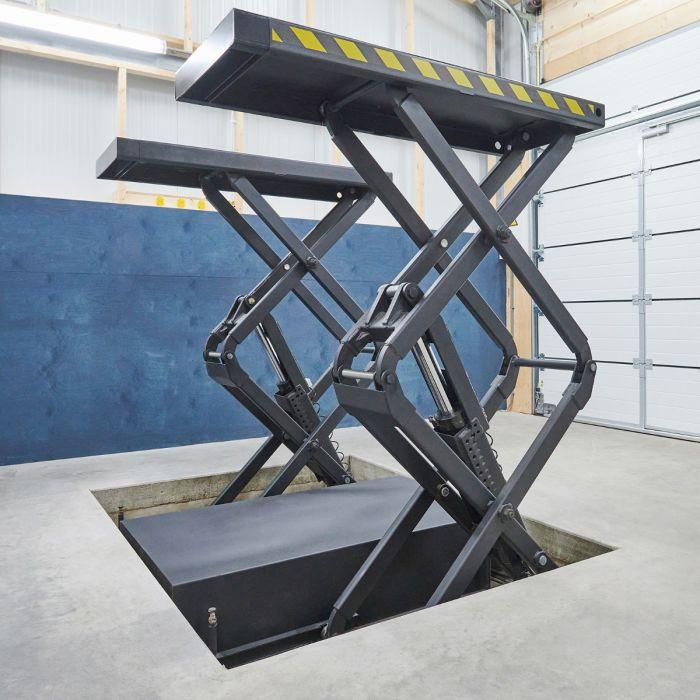
For this project type, the reference product is a hydraulic scissor-platform car lift rather than a portable service jack. That distinction changes the questions that matter. A workshop lift has to be evaluated as installed equipment: vehicle access, lifting geometry, working height, site preparation, electrical supply and the included hydraulic or control scope all influence whether the quoted configuration is actually usable.
Before sending an RFQ, identify the product family first. Chentuo’s Car Lifts category provides the relevant workshop-lift range. The RFQ should then name the intended lift type so suppliers do not substitute a different concept simply because it also appears under the broad phrase “car jack lift.”
Rated Capacity Is a Starting Point, Not a Complete Vehicle-Matching Rule
Capacity is one of the first numbers buyers compare, but it should not be treated as the only vehicle-selection criterion. The selected lift must be suitable for the vehicles that will actually enter the workshop, and the RFQ should describe that vehicle population instead of listing only a capacity number.
The Chentuo reference page identifies a 3000 kg capacity. For quotation purposes, the buyer should compare that rating with the maximum vehicle weight expected in normal service and confirm that the selected lifting arrangement is appropriate for those vehicles. If the workshop services vehicles close to the stated capacity, the supplier should be asked to confirm the intended application rather than leaving the buyer to infer compatibility from the headline rating alone.
This matters because two quotations can both state “3 ton” while describing different lift types, platform layouts or usable vehicle ranges. A capacity figure tells the buyer the rated load boundary of the offered machine; it does not by itself describe vehicle access, lifting-point relationship or workshop fit.
A good supplier response should therefore repeat the offered rated capacity and state the intended vehicle/application range. Any condition that limits use for particular vehicle types should be declared before the buyer compares price.
Lifting Height Changes the Workshop Use Case
Lifting height affects what work can be performed comfortably and how the lift fits into the planned service bay. A low or mid-rise lift may be sufficient for tire, brake or body work, while a higher working position can be more suitable when regular underbody access is required. The RFQ should therefore connect required height to the actual maintenance task.
The Chentuo reference product lists an 1800 mm lifting height. Buyers considering that configuration should verify whether the value satisfies their required working position and request the supplier’s technical drawing for the complete dimensional relationship.
Do not stop at maximum lifting height. The quotation should also identify the platform dimensions, lowered condition, approach arrangement and other installation dimensions required to confirm workshop fit. Those values should come from the supplier’s drawing or datasheet; they should not be assumed from another lift that happens to have the same rated capacity.
This is an important price-comparison control. If one quote covers a full-rise configuration that matches the workshop requirement while another quote is for a different lifting range or platform geometry, the prices are not competing offers for the same requirement.
Ground-Hidden Installation Must Be Separated From Equipment Price
The available Chentuo product information describes the reference lift as a ground-hidden type. That characteristic makes installation information especially important during quotation review.
“Ground hidden” should not be interpreted as a complete installation specification. The buyer still needs the supplier’s installation drawing and must confirm what site preparation is required for the offered configuration. The quotation should distinguish between the lift equipment supplied by the factory and work that remains the buyer’s or local installer’s responsibility.
Depending on the project, the buyer may need to coordinate floor preparation, reserved space, electrical connection, hydraulic components, anchoring or other site work. The exact requirements must come from the approved installation information for the offered lift. They should not be invented or copied from a visually similar model.
This separation prevents a common commercial mistake: comparing one factory quotation that includes more installation-related hardware or documentation with another that quotes only the core machine. The lower equipment price may create a higher local completion cost if important items have simply been excluded.
380/220V Is Not Enough to Define the Electrical Configuration
The product title lists 380/220V, but an international RFQ should still specify the actual electrical conditions at the destination workshop. Voltage alone may not fully define the required supply.
The buyer should state the target voltage, phase and frequency for each destination market and ask the supplier to repeat the offered electrical configuration in the quotation. If a distributor serves several countries, different versions should be identified as separate configurations rather than treated as one interchangeable product.
This variable can affect both technical acceptance and commercial scope. A quotation based on one electrical version should not be compared directly with another quotation that includes a different motor, control arrangement, plug or electrical preparation unless those differences have been normalized.
For repeat orders, the approved power configuration should also be written into the purchase specification. That creates a stable reference and reduces the risk of a later shipment being ordered under the same product name but with a different electrical assumption.
Compare What Is Included Before Comparing the Factory Price
A factory price can describe very different supply scopes. One quotation may include the equipment, standard control components, ramps or accessories, packing and documentation. Another may quote only the basic machine and list important items separately.
The RFQ should therefore require a line-by-line included-scope statement. For a hydraulic scissor lift, useful categories include the main lift assembly, standard hydraulic and control components supplied with the machine, access or approach components where applicable, standard installation hardware, operating documentation, installation information and any optional accessories.
Only include an item as “standard” after the supplier confirms it. The buyer’s job is not to guess what normally comes with a lift; it is to make the supplier’s quotation explicit enough to compare.
The same principle applies to packaging and export preparation. A distributor comparing factory quotations needs to know whether the quoted amount uses the same packing scope and whether optional protection or packaging requirements are included. Otherwise the apparent equipment-price difference may actually be a difference in shipment preparation.
Factory Price Also Depends on the Commercial Basis of the Quote
Even after the lift itself is technically aligned, commercial terms can make two quoted numbers look more comparable than they really are. Quantity, packing, delivery basis and destination-related scope should be recorded alongside the unit price.
For example, a single-unit evaluation order and a larger distributor order may not use the same commercial basis. Likewise, an ex-factory quotation should not be compared directly with an offer that already includes additional logistics or export-related scope.
The RFQ should ask each supplier to state the quotation basis clearly and identify what is excluded. Buyers can then compare the equipment price after the technical configuration is aligned, followed by the logistics and delivery components on a separate basis.
This avoids using one headline number to represent several different cost layers.
A Price Comparison Sheet Should Normalize These Inputs
| Quote Input | Buyer Must Define | Why It Affects Comparison | Supplier Should Return |
|---|---|---|---|
| Lift type | Hydraulic scissor lift, intended installation style and workshop use | Different lift concepts cannot be compared as the same product | Offered lift type and configuration |
| Rated capacity | Maximum vehicle weight and normal vehicle range | A shared capacity number does not prove the same application fit | Rated capacity and intended application range |
| Lifting height | Required working height and maintenance tasks | Different lifting ranges can mean different equipment and use cases | Maximum lifting height and dimensional drawing |
| Installation condition | Ground-hidden requirement, available bay and site constraints | Equipment-only quotes may exclude significant local preparation | Installation drawing, supplied hardware and buyer responsibilities |
| Electrical supply | Voltage, phase, frequency and destination | Electrical versions may change technical scope | Exact offered electrical configuration |
| Included equipment | Required standard components and accessories | Missing items can make a low quote incomplete | Included list, optional list and exclusions |
| Documents | Datasheet, installation instructions, operating information and warranty requirements | Documentation affects installation, acceptance and after-sales use | Document list and applicable warranty scope |
| Commercial basis | Quantity, packing requirement, delivery basis and destination | Different commercial bases distort unit-price comparison | Price basis, packing scope and exclusions |
The table should be completed before a buyer ranks suppliers by price. If a quotation cannot answer a key field, mark it as an open item rather than treating the supplier’s number as equivalent to a fully defined offer.
Use the 3000 kg Chentuo Scissor Lift as a Defined Reference Configuration
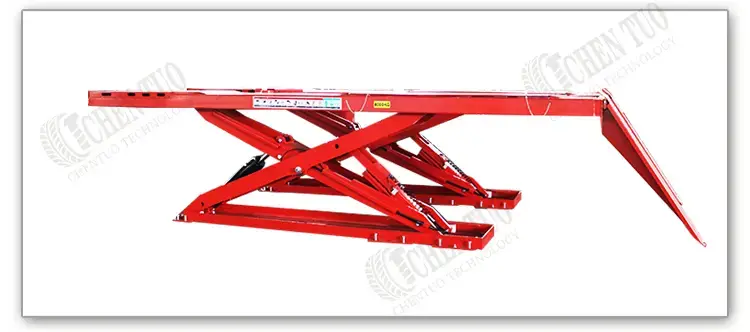
For a concrete comparison, buyers can review the Chentuo 3000 kg hydraulic scissor-platform car lift. The available product information identifies a hydraulic scissor configuration, 3000 kg capacity, 1800 mm lifting height, 380/220V power information and a ground-hidden design.
These points should become the baseline for supplier confirmation, not a shortcut around specification review. A buyer still needs the exact dimensional drawing, selected electrical version, supplied scope and installation requirements for the offered configuration.
If another quotation uses a different lift type, different working height or different installation approach, the price should be separated from the Chentuo reference rather than placed in the same comparison column as if the equipment were identical.
The decision sequence is simple: workshop requirement → normalized lift specification → supplier configuration → declared exclusions or deviations → comparable price.
What Evidence Should Be Requested With the Quote?
A professional quotation should contain enough evidence for the buyer to check the important assumptions. For this type of lift, request a technical datasheet or specification page and verify that the rated capacity, lifting height and electrical configuration match the quotation. Request the dimensional or installation drawing and check the overall installation relationship rather than relying on product photographs.
Operating or installation documentation should be reviewed for the responsibilities that affect local preparation. If a warranty is offered, ask for the actual warranty scope rather than comparing only a duration stated in a product title or sales message.
Any configuration that differs from the RFQ should be returned as a written deviation. This is particularly important for electrical supply, installation style, dimensions, accessories and document scope because those differences can remain hidden until delivery if the quotation records only a model name and unit price.
Prepare the Final Inquiry as a Quote-Normalization Package
Instead of sending a short request for “factory price car jack lift,” prepare one quotation package containing the intended lift type, vehicle range, required capacity, working height, installation condition, electrical supply, required accessory scope, documentation, quantity, packing and delivery basis.
Ask the supplier to return the selected configuration together with an included-scope list and a separate deviation list. This creates a procurement record that can be compared line by line rather than relying on product titles.
Once the specification is ready, the project can be submitted through Chentuo’s Contact Us inquiry form. The most useful inquiry is one that allows the supplier to confirm the technical baseline first and price it second.
That approach turns a “factory price” search into a controlled purchasing decision: compare the same lift type, the same capacity and height requirement, the same installation and electrical scope, and the same commercial basis before deciding which quotation is actually lower.