Automatic vs Leverless Tire Changer: Which Better Controls Rim-Damage Risk on Run-Flat Tires?
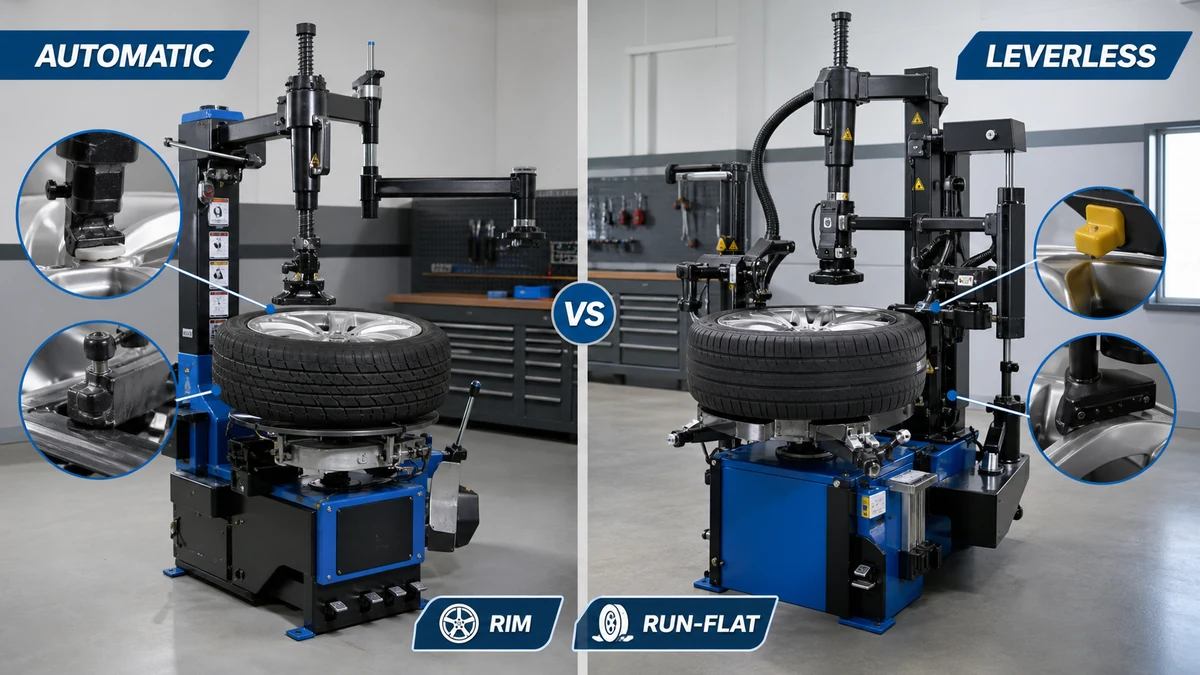
Direct Answer: An automatic tire changer is not automatically safer for run-flat or low-profile wheels, and a leverless design is not damage-proof. Rim risk depends on every contact point: clamping, mount/demount tool, bead breaker, helper arms, bead position, lubrication, protective inserts, wheel condition, operator visibility, and technique. Approve the machine through representative live tests, not the architecture label alone.
This comparison is for tire shops, dealerships, performance-wheel specialists, service chains, automotive equipment distributors, and OEM buyers that regularly handle stiff-sidewall run-flat tires or low-profile combinations. Chentuo supplies multiple tire-changer configurations for workshop and distributor procurement. Buyers can review the Tire Changers product category, then shortlist machines by wheel-risk controls and operator workflow.
Where Does Rim Damage Actually Begin?
Rim damage usually results from a chain of small errors rather than one machine feature. A tire can be correctly clamped yet still be scratched by a worn protector, forced bead, poorly positioned tool, insufficient lubrication, or a helper arm that presses in the wrong place.
| Risk Point | What Can Go Wrong | What the Buyer Should Evaluate |
| Clamping | Metal contact, incorrect centering, excessive or poorly distributed force | Clamping architecture, protectors, wheel-profile compatibility, visibility |
| Bead breaking | Tool contacts rim, TPMS area, or sidewall incorrectly | Control, positioning, operator access, protective surfaces |
| Mount/demount tool | Tool or lever contacts cosmetic wheel surface | Tool path, clearance, inserts, lever/leverless sequence |
| Helper arm | Incorrect bead pressure or uncontrolled movement | Number/location of pressure points, adjustability, visibility |
| Bead movement | Stiff bead is forced over rim rather than controlled into drop center | Lubrication access, bead-control method, operator training |
| Consumable wear | Protective polymer wears through and exposes harder surfaces | Inspection interval, replacement access, spare-stock plan |
The first buyer mistake is asking, “Is this machine leverless?” before mapping the complete wheel-contact sequence. Eliminating the traditional mounting bar can remove one contact risk while leaving several other contact points unchanged.
Why Are Run-Flat and Low-Profile Tires a Different Workshop Problem?
Run-flat and low-profile assemblies often require more controlled bead management because the sidewall and bead behavior can make mounting and demounting less forgiving. The purchasing team should describe the wheel/tire population rather than simply state “handles run-flat.”
Document:
- Common wheel diameters and widths
- Lowest-profile tire combinations regularly serviced
- Run-flat tire share of daily volume
- Alloy, painted, polished, or other cosmetic wheel finishes
- Reverse-mount or unusual wheel profiles encountered by the shop
- TPMS presence and service procedure
- Expected tire changes per day and peak periods
- Existing damage/claim rate the new machine is expected to reduce
A second industry mistake is buying for the largest advertised rim diameter while ignoring the difficult middle of the workload. A machine may accept the wheel size yet provide poor operator access or bead control on the exact low-profile combinations that create most damage claims.
What Is the Practical Difference Between Automatic and Leverless Architecture?
“Automatic” usually describes how machine functions are actuated; “leverless” describes a mounting/demounting approach that avoids or reduces use of the conventional manual lever at the rim edge. These terms are not interchangeable, and suppliers may use them differently. Buyers should ask for the exact operating sequence for the quoted configuration.
| Decision Point | Conventional/Automatic Architecture | Leverless or Crowbar-Free Architecture | Compatibility Evidence |
| Traditional lever contact | May be part of the mount/demount sequence depending on machine and procedure | Designed to reduce or remove that specific lever operation | Hub-bore coverage table |
| Other rim contact | Still depends on clamps, tool head, bead breaker, helper arms, and protectors | Still depends on clamps, tool head, bead breaker, helper arms, and protectors | Supported wheel examples/range |
| Operator skill | Correct bead position and tool use remain critical | Correct setup, bead position, and machine sequence remain critical | Approved mounting combinations |
| Training need | Operator must understand the complete contact path | Operator must learn a different workflow rather than assume automation prevents damage | Bolt-pattern coverage |
| Best procurement test | Live demo on the shop’s difficult wheel/tire set | Live demo on the same difficult wheel/tire set | Wheel and machine compatibility |
This is why architecture should be treated as one risk control, not the final purchasing decision.
How Should Clamping Be Audited Before a Machine Is Approved?
Clamping is one of the first places a cosmetic wheel can be marked. The buyer should identify how the wheel is retained, where force is applied, and which protective parts sit between the machine and finished rim.
During evaluation:
- Confirm supported wheel/rim range for the quoted configuration.
- Inspect clamping surfaces and replaceable protective pieces.
- Check centering repeatability on representative wheels.
- Verify whether reverse-mount or non-standard profiles require adapters.
- Observe whether the operator can see all relevant contact points.
- Check how protectors are inspected and replaced.
- Include spare clamps, protectors, or adapters in the quotation when they are wear items.
A third hidden cost is consumable neglect. A workshop may blame the machine when worn plastic protectors have exposed a harder underlying surface. Distributor buyers should therefore ask for consumable part numbers, replacement intervals based on inspection, and recommended opening stock.
What Do Helper Arms Change on Stiff-Sidewall Tires?
Helper arms can support bead positioning and reduce manual force, but value depends on where and how the arm applies pressure. The buyer should compare the number of pressure points, range of movement, operator control, visibility, and whether the arm helps keep the bead in the required position through the complete mounting sequence.
Check:
- Bead press or roller positions
- Control sensitivity and operator access
- Ability to maintain bead position through rotation
- Clearance around the rim and TPMS area
- Whether the helper arm interferes with certain wheel profiles
- Protective surfaces on contact tools
- Service and wear items in the helper-arm assembly
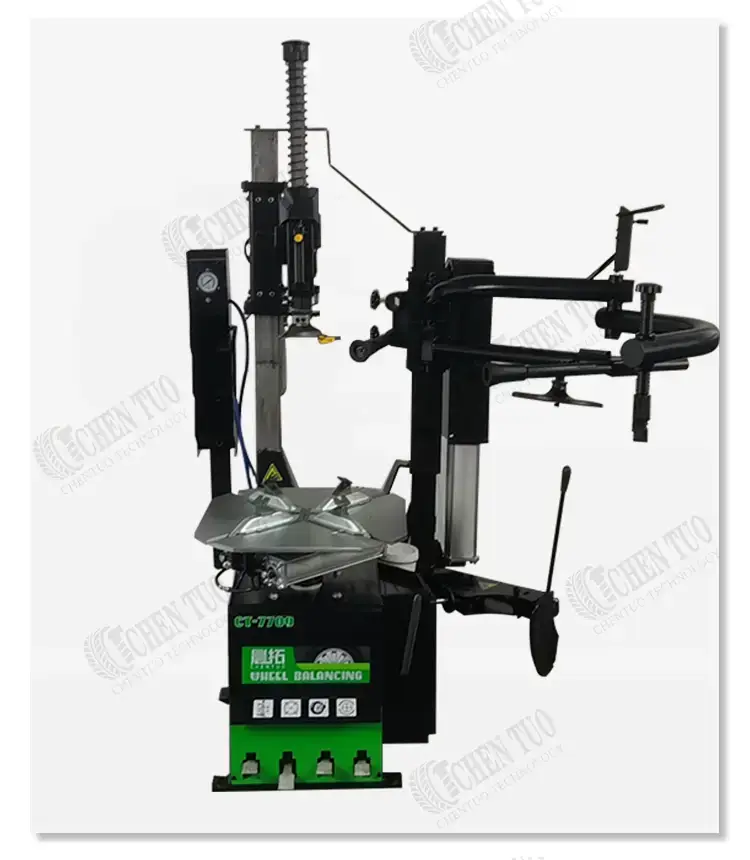
For a current Chentuo product reference, buyers can review the Electric/Pneumatic Wheel Clamp Tilt-Back Post Tire Changer with Assist Arm. The supplied product data lists electric/pneumatic operation with 380V/220V options, 3000 kg tire-force reference, and stated compatibility ranges including 12-24 and 13-24. These details support initial screening, but the exact run-flat workflow and rim-contact controls should be verified by demonstration.
Why Does Rim Protection Depend on Consumables and Setup?
Protective inserts, jaw covers, tool-head pieces, and other polymer surfaces are effective only while intact and correctly installed. A procurement plan should include the cost and availability of these wear parts.
| Protection Item | Workshop Check | Procurement Question |
|---|---|---|
| Clamp/jaw protectors | Wear, cracks, missing pieces, embedded debris | Are replacements included or available as spares? |
| Mount/demount head protection | Clearance and condition before difficult wheel jobs | What is the replacement part number and service method? |
| Bead tool/roller surfaces | Cleanliness, wear, correct alignment | Which surfaces are consumable? |
| Lubrication process | Correct access and consistent application under the shop procedure | Does machine layout help or obstruct the approved process? |
| Adapters | Correct fit for special wheel profiles | Which adapters are standard versus optional? |
A machine with excellent protective features can still create claims when a workshop does not stock the parts needed to keep those protections effective.
How Should CT7703 Be Used in a Buyer Comparison?
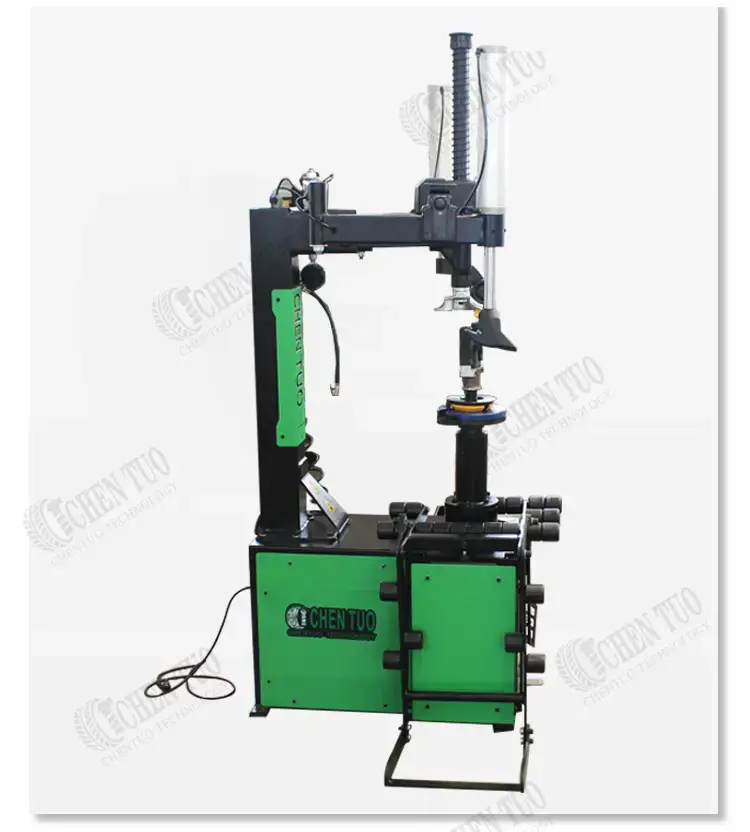
Chentuo’s CT7703 Automatic Tyre Changer is another relevant product reference. The supplied product data lists a double-cylinder design, a 12-26-inch external clamping hub, and 8 MPa working pressure. These are useful configuration facts for comparison, but they do not by themselves prove lower rim-damage risk.
Buyers should use such product data to build the demonstration plan: confirm which wheel/tire combinations fall within the quoted range, identify the supplied helper or protective components, and then inspect the entire contact sequence on representative run-flat and low-profile assemblies.
What Operator Behaviors Can Cancel the Machine’s Protective Features?
Operator technique remains part of the risk system. A fourth buyer mistake is treating a more automated machine as a substitute for training.
The acceptance and training plan should cover:
- Pre-inspection of wheel and tire condition
- Identification of existing scratches or rim damage before work starts
- TPMS awareness according to the shop’s approved procedure
- Correct clamping and centering
- Approved bead lubrication
- Keeping the bead in the required drop-center position
- Correct use of helper arms
- Inspection and replacement of protective consumables
- Stopping the cycle when resistance or tool position is abnormal
A fifth industry experience point is claim attribution. If the shop does not document the wheel condition before the job, it can be difficult to separate pre-existing rim damage from damage caused during service. Equipment procurement should be linked with the shop’s intake and training process.
Chentuo already publishes an article explaining why fully automatic tire changers reduce dependence on manual levers. The purchasing question here is narrower: whether the proposed machine and operator workflow control all meaningful rim-contact risks for the buyer’s difficult tires.
What Live Demonstration Should Be Required Before Approval?
The best comparison uses the same difficult tire/wheel set, the same acceptance rules, and trained operators for each shortlisted configuration.
| Demo Check | Evidence to Record | Pass/Fail Question |
| Initial wheel inspection | Photos and existing damage record | Can post-test damage be attributed objectively? |
| Clamping | Contact points, centering, protectors, setup time | Is the rim secured without unacceptable contact? |
| Demounting | Tool path, helper-arm use, bead control, operator visibility | Does the sequence avoid uncontrolled rim contact? |
| Mounting | Bead position, helper tools, force, lubrication access | Can the stiff bead be controlled without forcing it over the rim? |
| Post-test inspection | Rim face, edge, bead area, TPMS area, tire bead condition | Is there new cosmetic or functional damage? |
| Cycle time | Total time and manual interventions | Does protection remain practical at workshop volume? |
The machine with the lowest damage risk but double the cycle time may not be the best commercial choice for a high-volume shop. Likewise, the fastest machine is not economical if it creates wheel claims. Buyers should compare damage risk, training burden, cycle time, consumables, and service support together.
What Does a Representative Rim-Damage Scenario Look Like?
Scenario: A premium tire shop is replacing an older tire changer after an increase in cosmetic rim complaints on low-profile and run-flat jobs. This is a representative procurement scenario, not a claimed Chentuo customer case.
Business Background: The shop serves performance cars and SUVs with expensive alloy wheels. Management assumes a leverless machine will eliminate damage claims.
Problem: Supplier comparisons focus on “automatic” and “leverless” labels, while the shop does not document clamping method, helper-arm use, worn protective inserts, operator sequence, or difficult wheel profiles.
Cause: The business is treating architecture as the only damage-control measure. Existing workshop practices also contribute to rim contact.
Solution: The buyer creates a contact-point audit, selects representative difficult wheel/tire sets, requires live demonstrations, photographs each wheel before and after, records cycle time and manual intervention, reviews spare protectors and adapters, and trains operators on the approved sequence.
Buyer Decision Value: The buyer may select a well-controlled automatic/helper-arm configuration over a more expensive leverless option if the live trial shows equal or better rim protection with lower training and service cost. Conversely, a leverless architecture can justify higher price when it demonstrably removes a high-frequency contact risk without slowing throughput excessively.
How Should a Risk-Based Tire Changer RFQ Be Written?
- List run-flat and low-profile tire sizes regularly serviced.
- List wheel diameter, width, finish, reverse-mount or special profiles.
- State expected tire changes per day and peak volume.
- Define required clamping range and retention method.
- Request the exact mount/demount sequence for the quoted machine.
- List helper arms, rollers, bead presses, protectors, and adapters included.
- Request consumable and spare-part numbers.
- Define demo wheels/tires and post-test inspection criteria.
- Define operator training and service support.
- State quantity, destination, power supply, packing, and delivery target.
Frequently Asked Questions
Is a leverless tire changer always safer for alloy rims?
No. Leverless architecture can reduce one traditional lever contact, but clamping, tool heads, bead breakers, helper arms, worn protectors, and operator technique can still damage a wheel.
Can an automatic tire changer handle run-flat tires?
It depends on the exact machine configuration, helper tools, clamping range, wheel/tire combination, and approved operating procedure. Require a demonstration on representative run-flat assemblies.
Why are helper arms important for low-profile tires?
They can help control a stiff bead and keep it in the required position during mounting or demounting. The buyer should verify pressure-point location, movement, visibility, and protective surfaces.
What spare parts most affect rim-protection performance?
Model-specific jaw/clamp protectors, mount/demount head inserts, rollers, adapters, and other wear surfaces can be critical. Ask for an opening spare package and replacement part numbers.
Should the buyer compare tire changers using the same wheel?
Yes. Using the same representative difficult tire/wheel combinations creates a fairer comparison of contact points, cycle time, operator intervention, and post-test damage.
Does faster cycle time always reduce operating cost?
No. A faster cycle that increases rim claims, bead damage, or rework can cost more overall. Compare cycle time with damage risk, training, consumables, and service support.
What should a distributor send for a tire changer quotation?
Send tire/wheel range, run-flat and low-profile share, daily volume, clamping requirement, helper-arm needs, power supply, demo requirements, spare/consumable plan, quantity, destination, and delivery target.
Request a Tire Changer Risk and Configuration Review
Prepare the run-flat and low-profile tire list, wheel diameters and finishes, reverse-mount or special wheel requirements, daily volume, desired clamping method, helper-arm needs, power supply, demo acceptance criteria, consumable/spare expectations, quantity, destination, and delivery target. Submit them through Chentuo’s contact and quotation page. The team can compare available tire-changer configurations, identify missing wheel-risk information, and prepare a quotation with machine scope, accessories, training, spares, packaging, lead time, and exclusions.