What Should Buyers Verify When Comparing 2 Post Car Lift Low Ceiling Manufacturers?
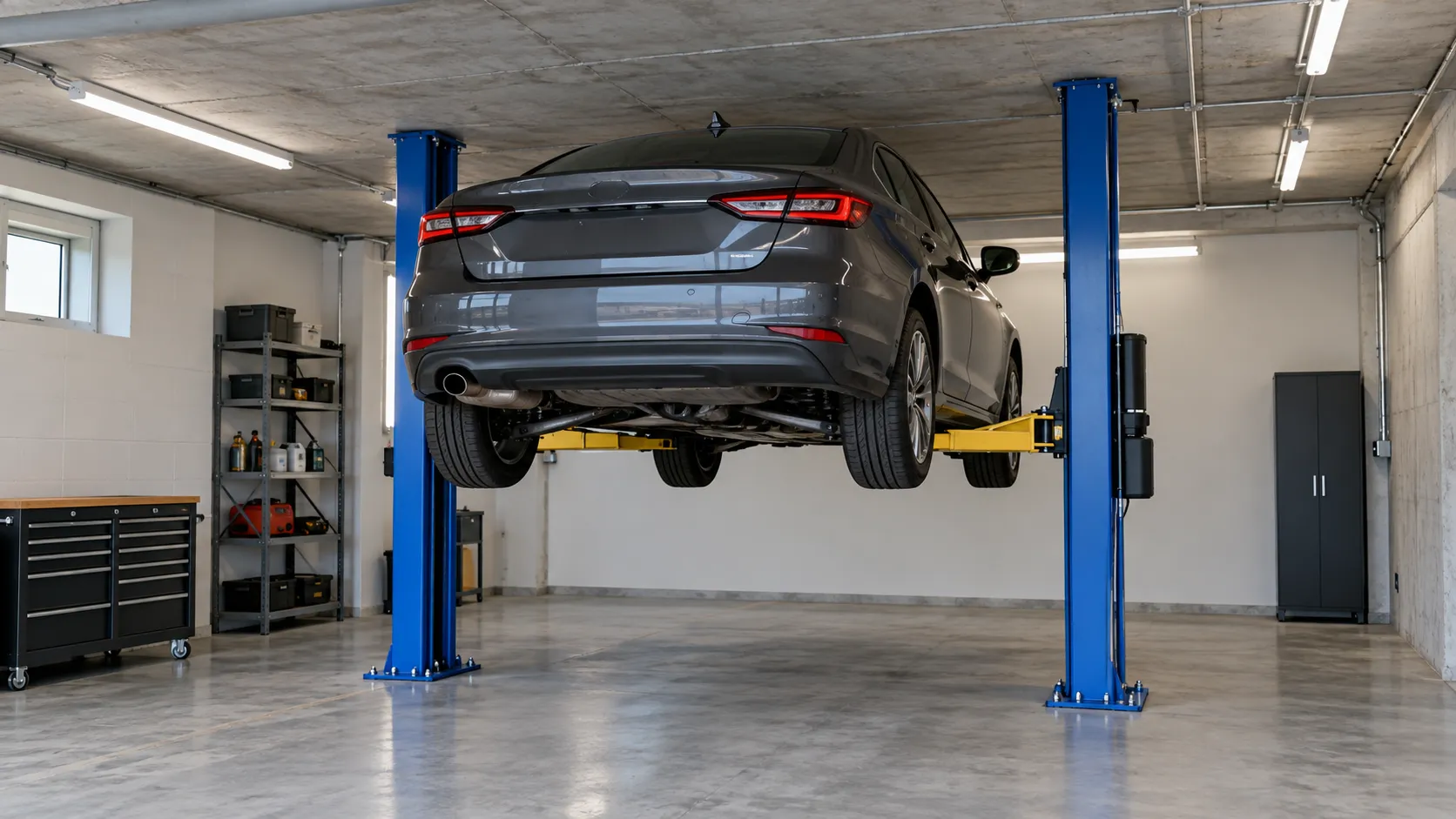
When comparing 2 post car lift low ceiling manufacturers, buyers should verify the workshop’s clear height, vehicle height, required lifting height, column and crossbeam design, lifting capacity, arm reach, floor and anchoring conditions, power supply, safety-lock configuration, documentation, installation support and packaging scope before sending an RFQ. A two-post lift is not automatically suitable for a low-ceiling garage because the actual limit depends on the building height, lift structure, raised vehicle envelope and service task. The supplier should provide product-fit evidence, dimensional information and deviation notes so the buyer can confirm that the selected two-post lift fits the site rather than only the keyword.
Low Ceiling Is a Site Constraint, Not Just a Product Name
The phrase “low ceiling” should be translated into measurable site data before supplier comparison begins. A buyer should not ask for a low-ceiling lift without stating the actual clear height from finished floor to the lowest obstruction. Beams, lights, ducts, door tracks and mezzanine structures can be the controlling height even when the general ceiling appears higher.
The RFQ should identify:
- clear ceiling height at the lift bay;
- height of the tallest vehicle expected on the lift;
- required working height for the service job;
- overhead obstructions such as beams, doors or lamps;
- whether the lift uses an overhead crossbeam or another column connection design;
- minimum acceptable raised-vehicle clearance for the technician’s work.
This site-first approach protects both buyer and supplier. The manufacturer cannot responsibly confirm application fit from “low ceiling” alone, and the buyer cannot compare two quotations unless both suppliers have evaluated the same workshop height constraint.
Chentuo’s Car Lifts category gives the buyer a broader view of available lift architectures, but the two-post low-ceiling decision must begin with the actual bay dimensions.
Confirm Whether a Two-Post Architecture Fits the Service Task
A two-post lift is often selected when a workshop needs wheel-free access for tire, brake, suspension or underbody service. It supports the vehicle through lifting arms rather than through full runways. That can make it useful in many service bays, but it also means the buyer must confirm vehicle lifting points, arm reach and balance before approval.
Low-ceiling workshops add another constraint. The lift may be able to raise the vehicle, but not high enough for the intended repair task. Alternatively, the lift structure may require more overhead clearance than the shop can provide. The correct decision is therefore a combination of vehicle fit and building fit.
A supplier evaluation should ask:
- what vehicle types and weight range the lift is intended to serve;
- whether the arm design reaches the required lifting points;
- how column spacing affects vehicle door opening and workshop movement;
- whether the shop needs symmetrical or asymmetrical arm access;
- whether the required raised height is realistic under the ceiling limit;
- what installation conditions must be met for the quoted model.
This prevents a buyer from approving a two-post lift only because capacity appears sufficient. Capacity is necessary, but it is not the complete fit decision.
Total Height, Crossbeam Design and Raised Vehicle Envelope Must Be Checked Together
The central low-ceiling check is not only the lift’s published maximum height. Three dimensions must be reviewed together: the lift’s structural height, the vehicle’s height, and the amount of vertical movement required by the job.
For an overhead or gantry-style two-post lift, the upper structure can become the limiting dimension. For other two-post designs, the bay may still be limited by the lifted vehicle roof, open hood, tailgate, roof rack or overhead services. A product may fit into the shop while the lifted vehicle does not provide useful work clearance.
The buyer should ask the supplier for a dimensional layout drawing showing total column height, arm position, maximum lifting height and required bay dimensions. If the product has an overhead connection or safety/cable routing at the top, that should be visible in the drawing. Where the shop is very tight, a simple side-view sketch of the bay with vehicle height can prevent a costly mismatch.
| Low-Ceiling Check | Buyer Input | Supplier Evidence |
|---|---|---|
| Clear building height | Measured floor-to-obstruction height at the lift location | Product layout showing required total height and clearances |
| Vehicle envelope | Tallest vehicle height, roof accessories and service position | Raised-vehicle clearance review or layout confirmation |
| Lift structure | Preference or constraint for overhead or non-overhead design | Column/crossbeam drawing and installation requirements |
| Working height | Required service access for the intended repair work | Confirmation that useful working height is achievable |
| Obstructions | Doors, ducts, lighting, beams and surrounding equipment | Site-layout comments and deviation notes |
The table is intentionally site-based. It turns “low ceiling” from a vague search phrase into an engineering confirmation path.
Capacity and Vehicle Support Must Match the Real Workshop Mix
For two-post lifts, capacity must be reviewed with the vehicle mix and lifting-point access. Chentuo’s corrected two-post product reference identifies a heavy-duty two-post steel vehicle lifter with 4000kg lifting capacity, double-cylinder hydraulics and electric drive. Those product facts help define the product direction, but the buyer still needs to confirm whether that capacity and geometry suit the actual vehicles being serviced.
A workshop serving compact passenger cars has a different vehicle mix from a shop that regularly handles SUVs, vans or fleet vehicles. The buyer should provide the normal vehicle types, maximum expected vehicle weight, wheelbase range where relevant and any known lifting-point restrictions.
Arm reach and pad position also matter. A lift with enough nominal capacity may still be inconvenient or unsuitable if the arms cannot reach the correct lifting points on the vehicles the shop serves. The supplier should confirm the arm configuration, pad/contact arrangement and any adapter requirements included or excluded from the quote.
If the quotation includes optional adapters or extensions, the buyer should separate them from the base lift price. Otherwise, one manufacturer may quote a complete workshop-ready package while another quotes only the core equipment.
Floor, Anchoring and Installation Conditions Are Part of Supplier Evaluation
Two-post lifts transfer vehicle loads into the floor through their columns and anchor points. That makes floor condition and installation requirements part of the product-fit evidence. The buyer should confirm whether the building floor meets the lift supplier’s installation requirements before treating a quotation as ready for order.
The RFQ should ask for:
- required concrete condition or slab information to be verified by the installer;
- anchor pattern and baseplate dimensions;
- minimum bay dimensions and column spacing;
- power supply and installation utility needs;
- installation manual or layout drawing;
- buyer-supplied items and excluded installation work;
- any site condition that would void or delay installation approval.
Do not assume that the manufacturer quotation includes site assessment, anchor hardware, installation labor or local approval. These items may be handled by the buyer, distributor or installer depending on the project.
The supplier’s responsibility is to provide clear installation requirements and declare assumptions. The buyer’s responsibility is to check those requirements against the actual shop before approving the purchase.
Safety, Control and Documentation Should Be Verified by Model
Buyers evaluating 2 post car lift low ceiling manufacturers should request model-specific safety and documentation information rather than generic claims. Safety-lock design, release method, cylinder arrangement, power/control system and emergency lowering procedure can differ by model.
The RFQ should not simply say “safe lift.” It should ask the supplier to identify the safety devices included in the quoted model, how the lift is operated, what maintenance checks are required, and what documents are supplied. If the destination market or distributor requires a particular certificate or local approval, that requirement must be stated and supported by actual product evidence.
Useful documents can include product specification, layout drawing, installation manual, operating manual, packing list, inspection record and any certificate that genuinely applies to the quoted model. The buyer should verify the model name, configuration, voltage and capacity in those documents.
This evidence check is especially important when comparing manufacturers. A general brochure may show several lift types, but the buyer needs proof for the exact two-post low-ceiling configuration being quoted.
How Should Buyers Review the Corrected Chentuo Two-Post Lift Page?
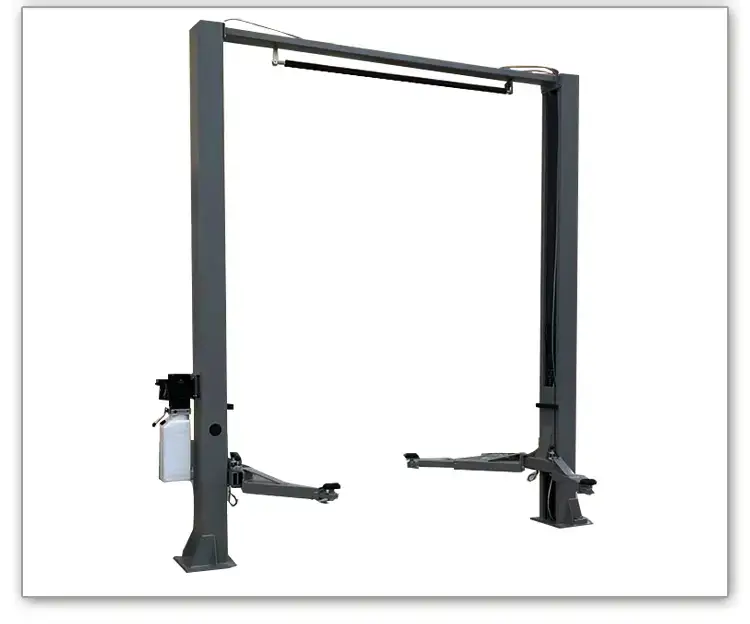
For this remapped topic, the corrected target product page is Chentuo’s Heavy Duty 4 Ton Double Cylinder Electric Drive Auto Hydraulic Lift Jack 2-Post Steel Vehicle Lifter 4000kg Lifting Garages Car. It is relevant because it is a real two-post car lift product page rather than the previous four-post target.
The page should be used as product-family evidence, not as an automatic low-ceiling approval. The buyer still needs dimensional confirmation for the specific shop: total height, column arrangement, raised-vehicle clearance, bay width, arm reach, power supply, floor requirement and installation documentation.
That distinction protects the article’s search intent. The keyword asks about low-ceiling two-post manufacturers, while the product page confirms a real two-post lift. The missing bridge is the buyer’s measured site condition and the supplier’s layout evidence.
What Makes Two Manufacturer Quotations Non-Comparable?
Two supplier quotations may both answer the same keyword but still be commercially different. Common differences include:
- one supplier quotes a true two-post lift while another quotes a four-post or scissor alternative;
- one quotation assumes an overhead design while another assumes a different column connection structure;
- clear ceiling height is not provided, so suppliers make different assumptions;
- capacity is quoted without confirming vehicle lifting-point access;
- installation requirements, anchors, power or local installer scope are treated differently;
- adapters, pads or arm accessories are included by one supplier and excluded by another;
- documentation and certification evidence differ by model;
- packing, destination and dealer support scope are not aligned.
The buyer should compare manufacturer quotations only after the same site, vehicle, lift structure, included scope and evidence package are being priced. A cheaper offer is not useful if it solves a different workshop problem.
RFQ Inputs for a Low-Ceiling Two-Post Lift Project
A complete RFQ should include:
- clear ceiling height at the proposed lift bay;
- lowest overhead obstruction and its position;
- target vehicle types and maximum vehicle weight;
- height of the tallest vehicle expected on the lift;
- required working height for the service task;
- preference or restriction regarding overhead structure;
- available bay width, depth and door clearance;
- required lifting capacity;
- arm reach, pad and adapter needs;
- floor/slab condition for installer review;
- power supply and destination-market electrical requirements;
- required safety, operating and maintenance documents;
- certificate or local approval requirement if applicable;
- included installation accessories and excluded buyer-supplied items;
- sample, distributor evaluation or bulk-order context;
- packing and shipping requirements;
- supplier deviations, assumptions and alternative lift recommendations.
Ask the manufacturer to return the response as Confirmed Site Fit / Confirmed Product Configuration / Required Installation Conditions / Included Scope / Deviation / Alternative / Buyer Input Required. This format allows the buyer to shortlist suppliers based on real low-ceiling fit evidence rather than a product title alone.
Once the site measurements and two-post product requirements are clear, buyers can submit the project through Chentuo’s contact and inquiry page with the bay layout, vehicle mix and documentation requirements already prepared.