Wheel Balancer Cone and Shaft Compatibility: What Should Multi-Brand Tire Shops Verify?
Direct Answer: A multi-brand tire shop should select a wheel balancer from its wheel inventory, not from machine capacity alone. Buyers should record hub-bore sizes, hub-centric and lug-centric wheels, bolt patterns, wheel diameter and weight, then verify the balancer shaft, cone or collet range, pressure cup, flange or pin-plate options, spacer requirements, included accessories, optional tooling, and future replacement-adapter availability before ordering.
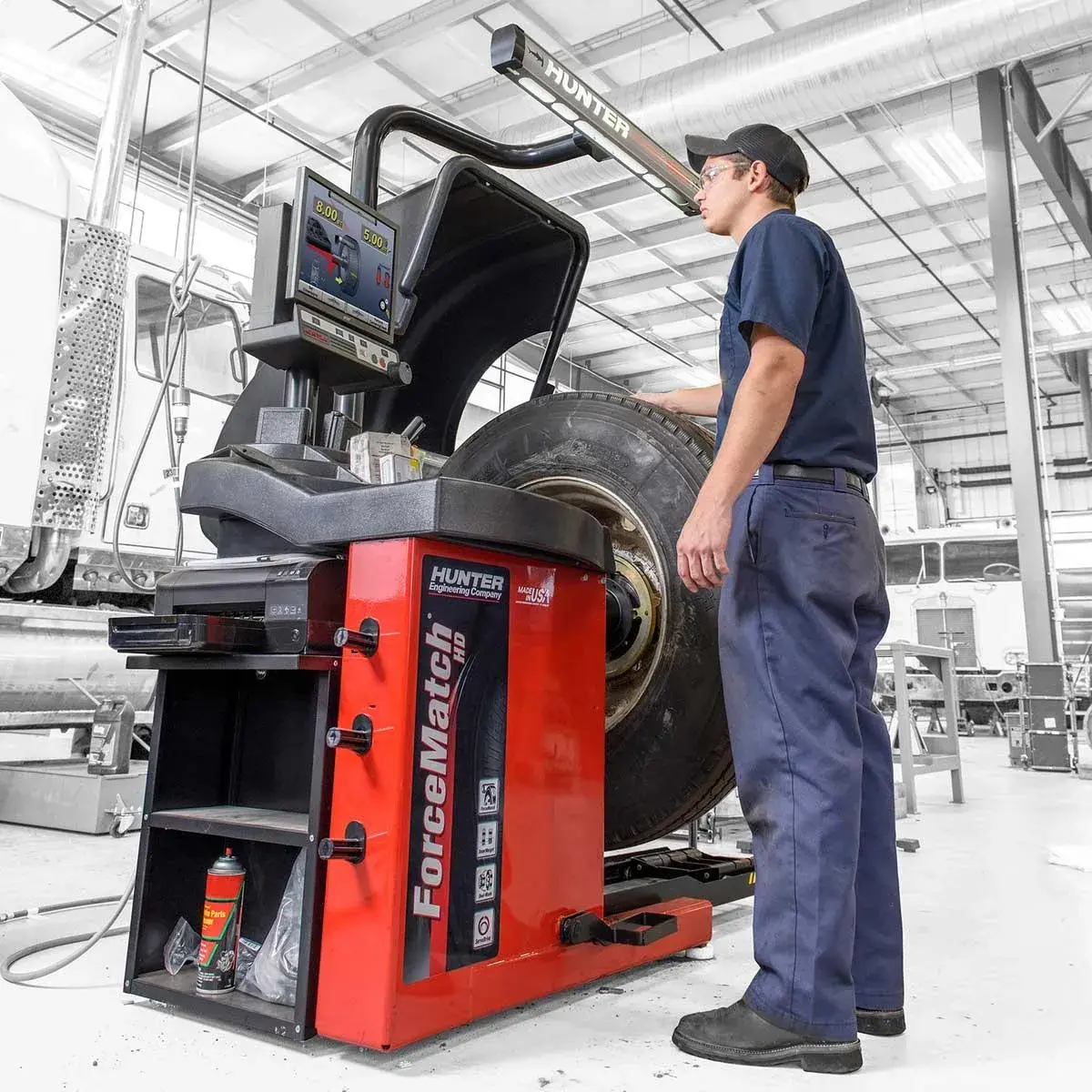
This matters to tire shops, automotive repair centers, fleet workshops, wheel specialists, equipment distributors, and OEM buyers serving several vehicle brands. A balancer can have enough motor power and wheel-weight capacity but still create repeat balancing work if the shop cannot center certain wheels correctly on the shaft. Centering hardware is therefore part of machine compatibility, not a minor accessory decision.
Chentuo supplies wheel balancers for workshop applications, including passenger-car and heavier-wheel models. The current product pages verify individual machine families, but they do not provide a complete universal cone, shaft, flange-plate, or lug-adapter compatibility map. Buyers should request that information against their real wheel inventory before purchase.
Why Doesn’t Maximum Wheel Capacity Prove Centering Compatibility?
Maximum wheel diameter, width, or weight tells the buyer whether the machine can physically handle a wheel within the manufacturer’s stated limits. It does not prove that the wheel can be centered correctly on the balancer.
Correct balancing depends on mounting the wheel concentrically and repeatably. If the wrong cone, cup, spacer, collet, or flange plate is used, the wheel can be mounted off-center. The balancer may then display a repeatable imbalance that actually comes from mounting error rather than the wheel-and-tire assembly.
Industry experience point: A wheel that gives different correction values after it is removed and remounted often points to centering or mounting repeatability before it points to machine calibration.
| Compatibility Layer | What It Answers | What It Does Not Answer |
| Machine wheel-weight rating | Can the machine safely handle the assembly weight? | Can this hub style be centered correctly? |
| Wheel diameter / width range | Does the machine workspace cover the wheel? | Does the shaft/cone set fit the hub? |
| Shaft dimensions | Which mounting hardware physically fits the balancer? | Which wheel types are covered without the right cones/plates? |
| Cone / collet range | Which hub bores can be centered by the tooling? | Does it cover lug-centric wheels? |
| Flange or pin plate | Can selected lug-centric or difficult wheels be centered through bolt-hole references? | Does it fit every bolt pattern and lug-seat design? |
How Should a Shop Inventory Hub-Centric and Lug-Centric Wheels?
Before requesting quotes, the shop should sample the wheels it actually services. Record vehicle make/model groups, wheel material, hub-bore diameter, bolt pattern, number of lugs, lug-seat style when relevant, center-bore accessibility, and wheel weight.
- Common passenger-car hub-centric wheels
- SUV and light-commercial wheels with larger bores
- Lug-centric wheels that should not rely only on a center cone
- Closed-center or unusually shaped wheels
- Medium/heavy-duty wheels if the same workshop services them
- Aftermarket wheels with bore rings or unusual center geometry
The purpose is not to build a database of every customer wheel. It is to identify the centering methods that represent most of the shop’s workload and the exceptions that require optional adapters.
Industry experience point: Multi-brand shops often have excellent cone coverage for common passenger wheels but lose time on a smaller group of commercial or aftermarket wheels that require a different centering method.
What Shaft Information Must Buyers Request?
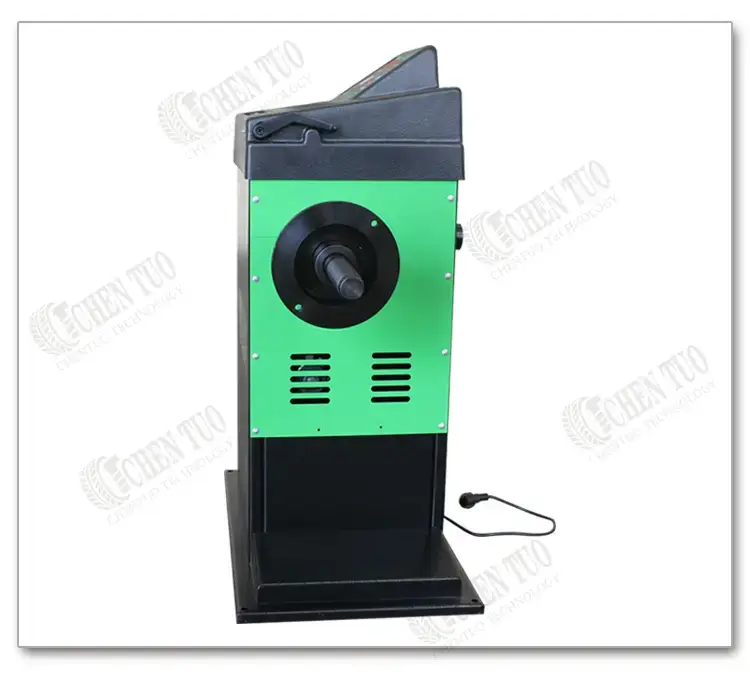
The balancer shaft determines which cones, cups, quick nuts, collets, spacers, and flange tooling can be used. Buyers should request the shaft diameter, usable shaft length, thread specification or compatible quick-lock system, and the supplier’s approved tooling list.
Do not assume accessories from an old balancer will transfer to a new machine just because both machines appear to use a similar shaft. Tooling can differ by diameter, thread, pressure-cup geometry, spacer arrangement, or manufacturer interface.
Industry experience point: Reusing an existing adapter inventory can reduce purchase cost, but only after physical and approved compatibility with the new shaft is confirmed.
How Should Cone Coverage Be Compared?
A cone centers a hub-centric wheel by contacting the center bore. The buyer should compare the usable hub-bore range of the included cone set, the number of cones, whether the set covers both small passenger bores and larger SUV/light-commercial bores, and whether special cones or collets are available for common exceptions.
The shop should also consider how the cone contacts the bore. A badly worn cone or inappropriate contact area can reduce repeatability even when the nominal diameter range appears correct.
Chentuo’s CT9911 digital wheel balancer is one current passenger-car-oriented product reference. Buyers should ask Chentuo for the actual shaft and included cone/accessory details for the quoted unit rather than infer them from another wheel balancer model.
When Are Flange Plates or Lug-Centric Adapters Required?
Some wheels are better referenced through the bolt or lug pattern rather than only through the center bore. In those cases, a flange plate, pin plate, or other manufacturer-approved lug-centric adapter can help reproduce the wheel’s installed centering method.
- Which bolt counts and bolt-circle ranges are supported
- Whether different pin diameters or lug-seat shapes are required
- How the adapter centers on the balancer shaft
- What spacer or back-cone arrangement is required
- Whether the plate and pins are included or optional
- How replacement pins and components are ordered
Industry experience point: A “universal” flange plate can still have practical coverage limits. Buyers should request a compatibility table rather than rely on the word universal.
How Do Passenger, SUV, Van, and Truck Wheels Change the Tooling Set?
| Wheel Group | Likely Centering Questions | Buyer Evidence to Request |
| Passenger cars | Common hub-bore coverage and standard pressure-cup/cone setup | Included cone range and shaft specification |
| SUV / pickup | Larger bores, heavier assemblies, wider wheels | Large-cone/collet coverage plus machine weight/size limits |
| Light-commercial vans | Large bores, unusual wheel centers, higher workload | Wheel examples matched to approved adapters |
| Lug-centric wheels | Bolt-pattern and pin-plate compatibility | Flange/pin plate range and included pins |
| Medium/heavy-duty wheels | Large bore, high wheel weight, truck-specific cones/rings/plates | Dedicated heavy-wheel machine and tooling documentation |
For shops handling heavier wheels, Chentuo also lists an Automatic Truck Bus Wheel Balancer. That product page confirms a heavier-duty wheel-balancer family, but the exact truck centering tooling and shaft interface should still be verified for the buyer’s wheel population.
Why Should Included and Optional Accessories Be Normalized Across Quotes?
Wheel balancer quotations can appear close in machine price while differing substantially in usable centering coverage. One supplier may include only a basic passenger-car cone set, while another includes larger cones, spacer cups, quick nuts, or flange tooling.
| Accessory | Included | Optional | Compatibility Evidence |
| Standard cones | List sizes/range | List missing ranges | Hub-bore coverage table |
| Large cones / collets | Yes/No | Part number and price | Supported wheel examples/range |
| Pressure cups / spacers | List supplied items | Additional options | Approved mounting combinations |
| Flange / lug-centric plate | Yes/No | Pattern/pin options | Bolt-pattern coverage |
| Truck tooling | Yes/No | Dedicated kit | Wheel and machine compatibility |
Industry experience point: The lower machine price can become the higher installed cost when the shop later buys several centering kits separately and waits for accessories that were not included in the original shipment.
How Does Workload Change the Adapter Decision?
A rare wheel type may justify an optional adapter ordered only when needed. A wheel type representing a meaningful share of daily jobs should be supported by a fast, repeatable centering method included from the start.
The shop should estimate weekly wheel volume by vehicle group, not only count vehicle models. This helps decide whether to prioritize broad cone coverage, quick-change centering tools, lug-centric plates, heavy-wheel tooling, or a separate heavy-duty balancer.
High-volume shops should also consider how long centering takes, how easy it is for different technicians to reproduce the setup, and how adapters are stored so the correct tooling is available at the machine.
Scenario: A Multi-Brand Shop Buys a Balancer That Handles the Weight but Not the Wheels
Representative scenario — not a claimed Chentuo customer case.
Business Background: A tire shop services passenger cars, SUVs, pickups, and several commercial-van brands. It purchases one new balancer based on wheel-weight capacity and rim-size range.
Problem: Most passenger wheels balance normally, but several vans and aftermarket wheels give inconsistent readings after remounting. The included cones do not center those hubs reliably, and no lug-centric plate was included.
Cause: The buyer audited machine capacity but not hub-bore, lug-pattern, shaft, cone, and adapter coverage.
Solution: The shop measures a representative wheel inventory, separates hub-centric from lug-centric jobs, records bore and bolt-pattern ranges, and asks suppliers to map every high-volume wheel group to an approved centering method. Included and optional adapters are then normalized before the replacement order.
Buyer Decision Value: The shop purchases repeatable centering coverage rather than only a machine with sufficient wheel capacity.
How Can Buyers Distinguish Centering Problems From Calibration Problems?
If balance readings change after the same wheel is removed, rotated, and remounted, first review centering cleanliness, cone/adapter condition, mounting direction, pressure cup, spacer use, and clamping consistency. Machine calibration is also important, but calibration cannot correct a wheel mounted eccentrically.
Chentuo’s existing article How Often Should a Wheel Balancer Be Calibrated? addresses the calibration decision separately. The current topic focuses on pre-purchase mounting-interface compatibility.
Industry experience point: Recalibrating a machine repeatedly without checking centering hardware can waste service time and leave the original mounting error unchanged.
What Spare and Replacement Adapter Questions Belong in the RFQ?
Adapters are wear, loss, and damage risks in a busy workshop. Before purchase, ask how replacement cones, cups, nuts, spacers, flange plates, pins, and truck accessories are identified and ordered. Also ask whether accessory part numbers remain common across several Chentuo balancer models or are model-specific.
For distributors, spare-tooling availability can matter as much as the initial accessory set because downstream customers may need replacements years after the machine is sold.
What Should Buyers Put in a Wheel Balancer Compatibility RFQ?
Send the vehicle/wheel groups serviced, representative hub-bore range, hub-centric versus lug-centric mix, bolt patterns, maximum wheel diameter/width/weight, shaft diameter and length required if matching existing tooling, cone/collet coverage required, flange/pin-plate needs, passenger versus truck workload, included accessories requested, optional adapter list, replacement-tooling lead time, electrical supply, documentation, destination, and expected spare-parts support.
Ask the supplier to map the proposed machine and each adapter to the wheel groups in the RFQ. Do not accept “fits most cars” as a substitute for compatibility evidence.
Frequently Asked Questions
Why does a wheel balancer need different cones?
Different wheel center bores require different cone or collet sizes to center the wheel on the balancer shaft. The included range should match the shop’s actual wheel inventory.
Is maximum wheel weight enough to choose a balancer?
No. Weight and diameter confirm physical handling limits, while shaft and centering tooling determine whether the wheel can be mounted concentrically and repeatably.
What is a lug-centric adapter?
It is an adapter that references the wheel through its lug/bolt pattern rather than relying only on the center bore. The exact plate and pin configuration must match the wheel and balancer tooling.
Can old wheel-balancer cones be reused on a new machine?
Only after shaft diameter, thread/locking interface, cup/spacer arrangement, and manufacturer compatibility are confirmed. Similar appearance does not prove safe or accurate fit.
Do truck wheels need a different balancer?
Often they require higher wheel-handling capacity and larger or truck-specific centering tooling. Buyers should confirm the actual heavy-wheel range rather than assume a passenger-car machine can accept truck wheels.
How do I know whether inconsistent results are caused by centering?
If values change significantly after the wheel is removed and remounted, inspect the hub bore, cones, adapters, spacers, clamping and mounting repeatability before assuming the machine itself is out of calibration.
What should buyers send Chentuo for a compatibility review?
Send wheel groups, hub-bore ranges, lug patterns, wheel size/weight, current adapter inventory, required shaft interface, cone/flange coverage, daily workload, optional-tooling needs, destination and spare-parts expectations.
Request a Wheel-Inventory Compatibility Review
For a wheel balancer quotation, send Chentuo a representative wheel inventory with hub-bore range, lug patterns, passenger/SUV/van/truck mix, maximum wheel size and weight, existing tooling, required cone or flange coverage, daily workload, included-accessory expectations, optional adapters, spare-tooling needs, and destination through the Contact Us page. Chentuo can review its wheel-balancer range against those inputs and identify which shaft or centering-tool details still need confirmation before ordering.