Which Specifications Should Buyers Freeze for an 8000 lb Car Lift?
Which Specifications Should Buyers Freeze for an 8000 lb Car Lift?
Direct Answer: Before ordering an 8000 lb car lift, freeze the governing rated capacity, intended vehicle range, load distribution, runway dimensions, wheelbase and track coverage, minimum and maximum lift height, shop clearances, power and hydraulic interfaces, safety-lock functions, installation requirements, included accessories, documentation and acceptance tests. Do not treat pound, metric-ton and model labels as automatically interchangeable.
The search phrase car lift 8000 lb capacity describes a load class, not a complete procurement specification. Buyers still need to define how the rating is stated, which vehicles will use the lift, how their axle loads sit on the runways, and which installation and safety conditions govern the project.
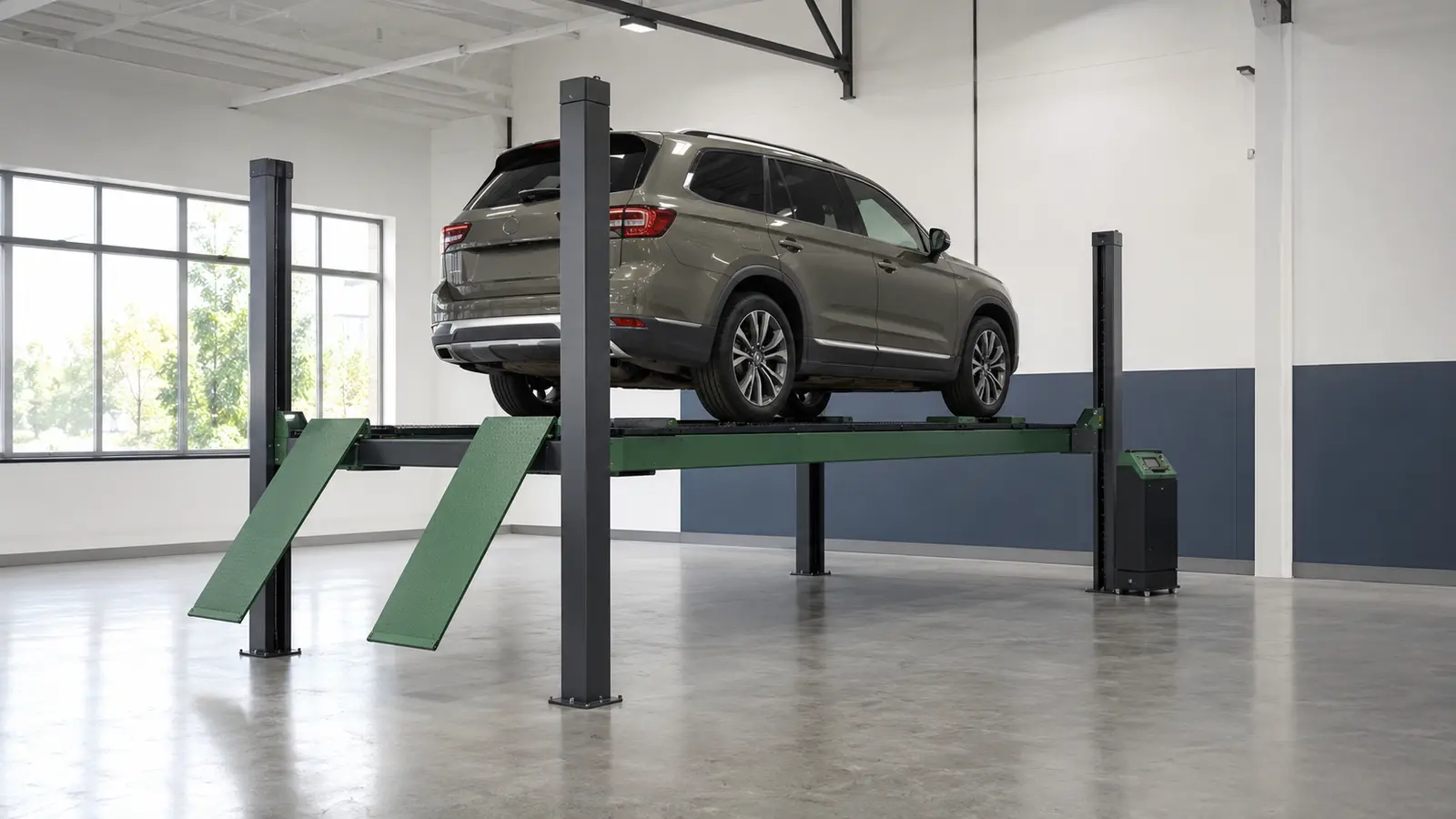
The listed Chentuo CT609 four-post car lift presents 4T/5T capacity options, hydraulic and electric operation, and a maximum lift height of 72.8 inches. A buyer should select and document one exact configuration rather than copying every headline value into a purchase order.
Resolve the Capacity Unit Before Comparing Models
Pounds, kilograms and metric tons can be converted mathematically, but equipment ratings should be taken from the manufacturer's controlled specification for the exact model and configuration. Do not round an 8000 lb request into a 4T or 5T label and assume the products are equivalent.
The order should identify:
- the selected model and rated capacity;
- the unit used on the nameplate, manual and sales document;
- the applicable load-distribution assumptions;
- any reduced rating linked to an optional configuration or operating condition;
- the evidence required to confirm the delivered rating.
A higher headline capacity does not automatically make a lift suitable. The vehicle must fit the runway geometry, approach path, platform length and working clearances, and the load must remain within the approved distribution.
Define the Vehicle Population and Load Cases
Prepare a vehicle matrix covering the lightest, most common and heaviest vehicles expected in the bay. Record gross vehicle mass, front and rear axle loads where available, wheelbase, track width, tire width, ground clearance and any long overhangs or special body equipment.
For fleet or mixed-workshop projects, average vehicle weight is not a safe design input. A workshop may service mostly passenger cars but occasionally receive a loaded van, long-wheelbase vehicle or vehicle with uneven axle loading. The buyer should either include those cases in the lift specification or state that they are excluded.
The product's nominal rating should never be used to infer suitability for a vehicle whose loading condition has not been reviewed. Ask the supplier to evaluate the matrix against the selected CT609 configuration and state any boundary conditions.
Freeze Runway Geometry and Vehicle Access
Four-post lifts support the vehicle through its wheels on parallel runways. The buyer therefore needs more than overall lift dimensions. Freeze usable runway length, runway width, clear distance between runways, adjustable range if applicable, approach-ramp geometry and the maximum vehicle track and wheelbase that can be positioned as intended.
Minimum vehicle clearance also matters. Low vehicles, long overhangs and short wheelbases can interact differently with ramps and platform transitions. Request a dimensional drawing and check representative vehicles against it before production.
If a four-post configuration is not the right route, compare it with the site's two-post car lift option as a different architecture, not as a direct substitute. The lifting points, access, vehicle support and installation requirements differ.
Confirm Lift Heights and Workshop Clearances
The CT609 listing states a maximum lift height of 72.8 inches, while the product data also identifies a 25-inch lower value. Buyers should request a controlled dimensional drawing that explains each height reference, including platform position, ramp condition and any accessory that changes the value.
Check the lift against:
- clear ceiling height and overhead obstructions;
- the tallest approved vehicle on the platform;
- door tracks, lighting, sprinklers and service lines;
- required working height beneath the vehicle;
- floor slope and the finished installation level;
- clearance for ramps, control position and vehicle circulation.
The maximum lift position is not always the practical working height. A safe operating envelope should include the vehicle and the building, not just the empty lift.
Specify Power, Hydraulic and Installation Interfaces
The CT609 is described as hydraulic and electric, but the order must identify the destination electrical supply and the exact power-unit configuration. Freeze voltage, phase, frequency, connection arrangement, control location and any local disconnect requirement. Confirm the approved hydraulic fluid, initial fill status and commissioning procedure with the supplier.
Foundation and anchoring requirements should come from the manufacturer for the selected configuration and be checked against local building and safety requirements by qualified parties. Buyers should not reuse a foundation detail from another lift because post layout, loads and anchoring conditions can differ.
Before shipment, the buyer should assign responsibility for site survey, foundation preparation, unloading, positioning, anchoring, electrical connection, commissioning and operator handover. An unclear responsibility matrix often becomes an installation delay rather than a product defect.
Separate Standard Equipment From Alignment Options
A four-post lift may be purchased for inspection, general repair, storage or wheel-alignment work, but these applications do not always use the same runway equipment. If alignment is required, specify whether the project needs front turntable provisions, rear slip plates, level-control requirements, rolling jacks or other application-specific items.
Do not assume these features are standard unless the product data and quotation state that they are included. Define the quantity, dimensions, load rating, mounting arrangement and packing status for every option.
The broader Chentuo car lift category contains different lifting concepts. Buyers should choose the architecture first, then freeze the detailed configuration. Adding alignment or service accessories after production can create interface, lead-time and freight problems.
Review Safety Functions as a System
A safety checklist should follow the actual lift design and the destination's requirements. Buyers should request a functional description of mechanical locks, hydraulic protection, lifting synchronization, travel limits, emergency lowering and control behavior. The exact features must be verified for the ordered version rather than inferred from a similar model.
Ask how the operator confirms lock engagement and what routine inspections or maintenance are required. Also request the manual and relevant compliance evidence early enough for technical review. A certificate title alone does not show that the document applies to the correct model, rating or market.
The site's warning about a car lift that is not level reinforces an important procurement point: equipment, installation and commissioning should be treated as one acceptance system. Buyers should not rely on an unsupported risk multiplier from a headline; they should require project-specific level and installation checks.
Create a Configuration Freeze Sheet
| Specification Group | Items to Freeze | Acceptance Evidence |
| Identity and capacity | Model, selected 4T/5T version, governing unit and load conditions | Nameplate, controlled specification and order match |
| Vehicle fit | Approved vehicle matrix, wheelbase, track, axle loading and exclusions | Supplier compatibility response and dimensional review |
| Runways and travel | Usable runway geometry, ramp arrangement, minimum and maximum positions | Approved general-arrangement drawing |
| Site interfaces | Power, hydraulic setup, foundation, anchors and clearances | Installation documents and site-readiness checklist |
| Safety and controls | Locking, synchronization, limits, lowering and control functions | Functional test record and applicable documentation |
| Options and delivery | Alignment accessories, rolling jacks, packing, manuals and spares | Packing list, photos and document register |
The freeze sheet should carry a revision and be referenced by the purchase order. If any item changes after approval, the supplier should state the impact on compatibility, price, delivery, packing and acceptance before proceeding.
Plan Factory and Site Acceptance Separately
Factory acceptance confirms the delivered equipment before shipment. Site acceptance confirms the completed installation under real site conditions. The two stages should use related but distinct checklists.
A factory check may cover model identity, visible workmanship, power-unit operation, lifting and lowering functions, lock operation, control response, leakage observations, accessory count and packing. The agreed procedure should define whether a load test is included and which load condition applies.
Site acceptance may cover foundation readiness, installed level, anchoring, electrical connection, hydraulic setup, synchronization, lock engagement, clearances, operator controls and documentation handover. Only qualified personnel should perform installation and testing in accordance with the manufacturer's instructions and local requirements.
Buyers sourcing several workshop stations can use the full automotive repair equipment catalog to plan space and utilities, but each lift should retain its own installation and acceptance file.
Representative Scenario — Not a Claimed Customer Case
Business Background: A service-chain buyer requests an 8000 lb four-post lift for passenger cars, SUVs and light commercial vehicles across several branches.
Problem: The quotation lists a CT609 with 4T/5T capacity and 72.8-inch maximum lift height, but the branches have different ceiling heights, power supplies and vehicle mixes. Alignment accessories are mentioned in discussions but not listed in the offer.
Cause: The buyer treated the capacity search term as the specification and did not freeze the selected rating, vehicle matrix, runway geometry, site utilities or accessory scope.
Solution: Each branch submits a site and vehicle sheet. The buyer selects one controlled lift version, confirms dimensional fit and utilities, lists every alignment option, assigns installation responsibilities and agrees on separate factory and site acceptance records.
Buyer Decision Value: The buyer can compare identical scope across locations and identify site exceptions before production instead of resolving them during installation.
RFQ Information for the CT609
- Required rated capacity and the unit that will govern approval.
- Vehicle matrix with weight, axle loading, wheelbase, track and clearances.
- Selected runway dimensions, ramp arrangement and lift-height requirements.
- Workshop drawing with ceiling, doors, utilities and traffic clearances.
- Destination voltage, phase, frequency and connection requirements.
- Foundation information and responsibility for site verification.
- Required safety functions and destination documentation.
- Alignment, jacking or other optional equipment with exact quantities.
- Factory and site acceptance procedures.
- Packing, unloading, installation, training, spare-parts and warranty scope.
Frequently Asked Questions
Is an 8000 lb car lift the same as a 4T lift?
Do not approve equipment by rounded conversion alone. Use the manufacturer's controlled rating for the exact model, confirm the governing unit and review load-distribution conditions. Record the selected capacity consistently in the order and acceptance documents.
What vehicle information matters besides total weight?
Axle loads, wheelbase, track width, tire width, ground clearance, overhangs and vehicle height can affect compatibility. Include the operating vehicle condition, not just an empty curb-weight figure.
Does a 72.8-inch lift height guarantee enough working space?
No. Buyers must combine the approved lift position with vehicle height, platform geometry, ceiling clearance and overhead obstructions. Request a dimensional drawing and check the complete installed envelope.
Are alignment accessories normally included with a four-post lift?
Inclusion varies by configuration. If alignment work is required, list turntable provisions, slip plates, rolling jacks or other needed items explicitly and verify their dimensions, ratings and packing status.
Who should verify the foundation and installation?
The supplier should provide requirements for the selected model, while qualified local parties should verify the actual site and applicable rules. Installation responsibilities must be assigned before shipment.
What evidence should buyers receive before shipment?
Request model and configuration confirmation, the approved drawing, functional test records under the agreed procedure, accessory and packing lists, installation documents and any destination-specific documentation required by the order.
When should specifications be frozen?
Freeze them before production or inventory allocation is approved. Later changes to capacity, voltage, runway equipment or accessories may affect compatibility, price, delivery and packing.
Convert Capacity Into an Installable Configuration
To request a CT609 review, send the vehicle matrix, selected load rating, workshop layout, runway and lift-height requirements, power supply, foundation information, required safety documentation, options, quantity, destination, installation responsibility and acceptance plan through the Chentuo contact page. Ask for a controlled configuration sheet and all quotation exclusions before the order is released.